
This post contains affiliate links. If you buy through one, I earn a commission at no additional cost to you.
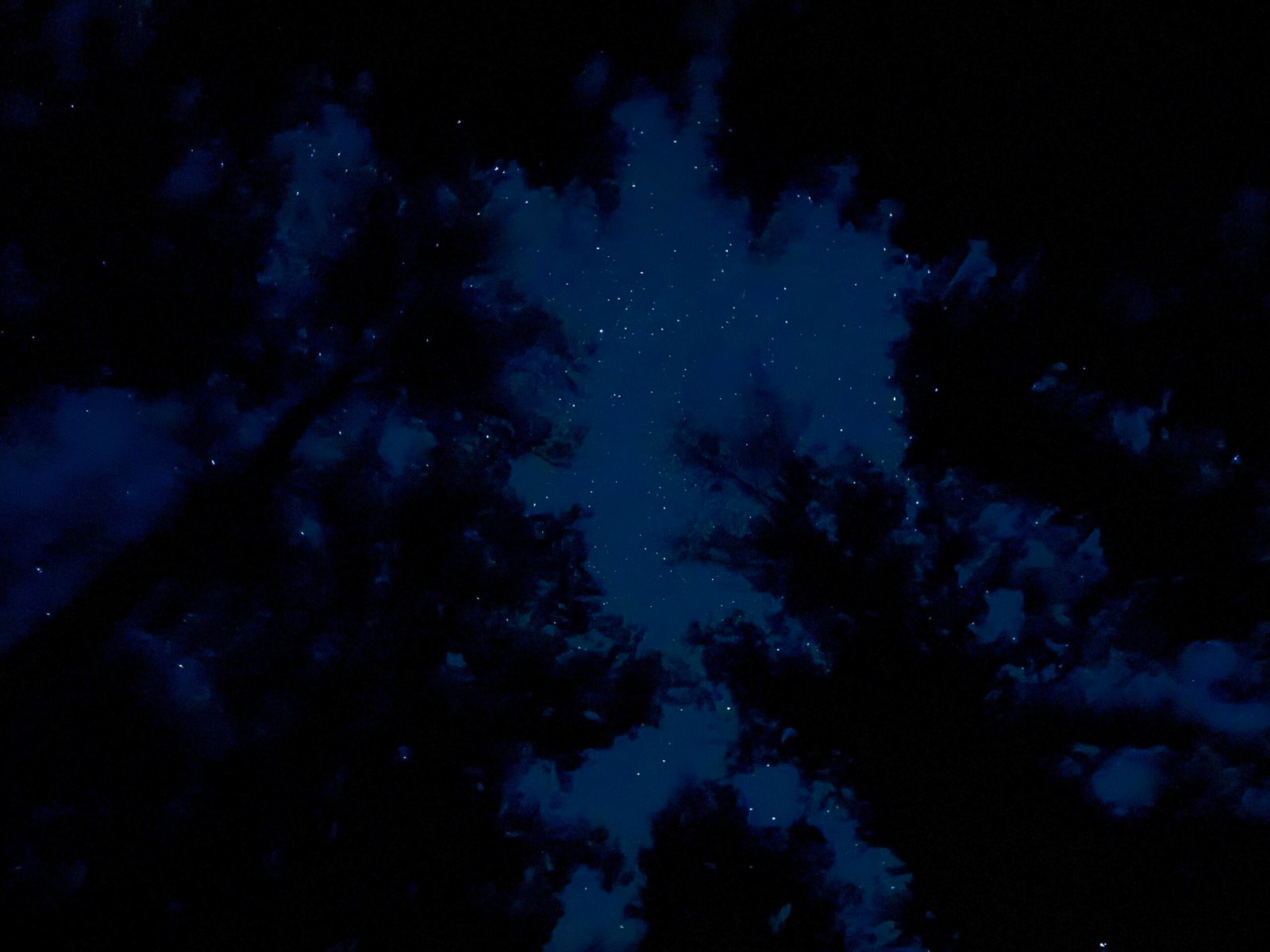
At night, Elkmont is dark. Real dark.
Once the campground settles in, you could do without window covers entirely, except for one light. It’s inside the restroom on the far side of the loop, shining out through the one window, and from there it found my little Jeep and stayed on it all night, doggin’ it in the worst way from clear across the campground. Everything else was crickets and the stream.
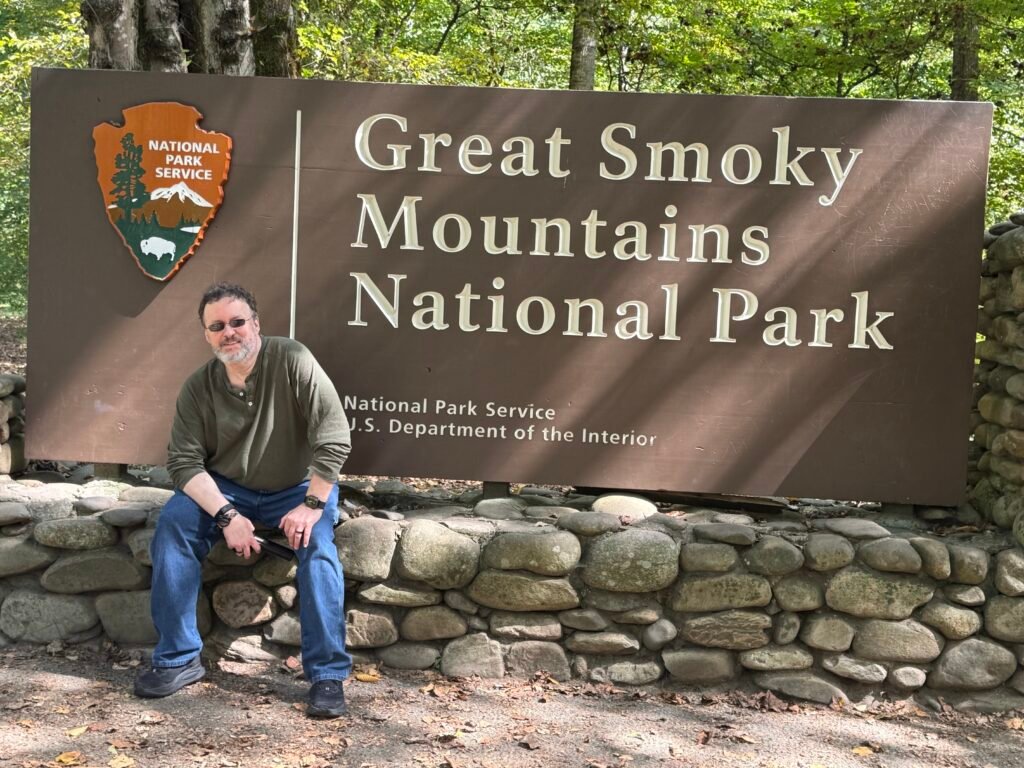
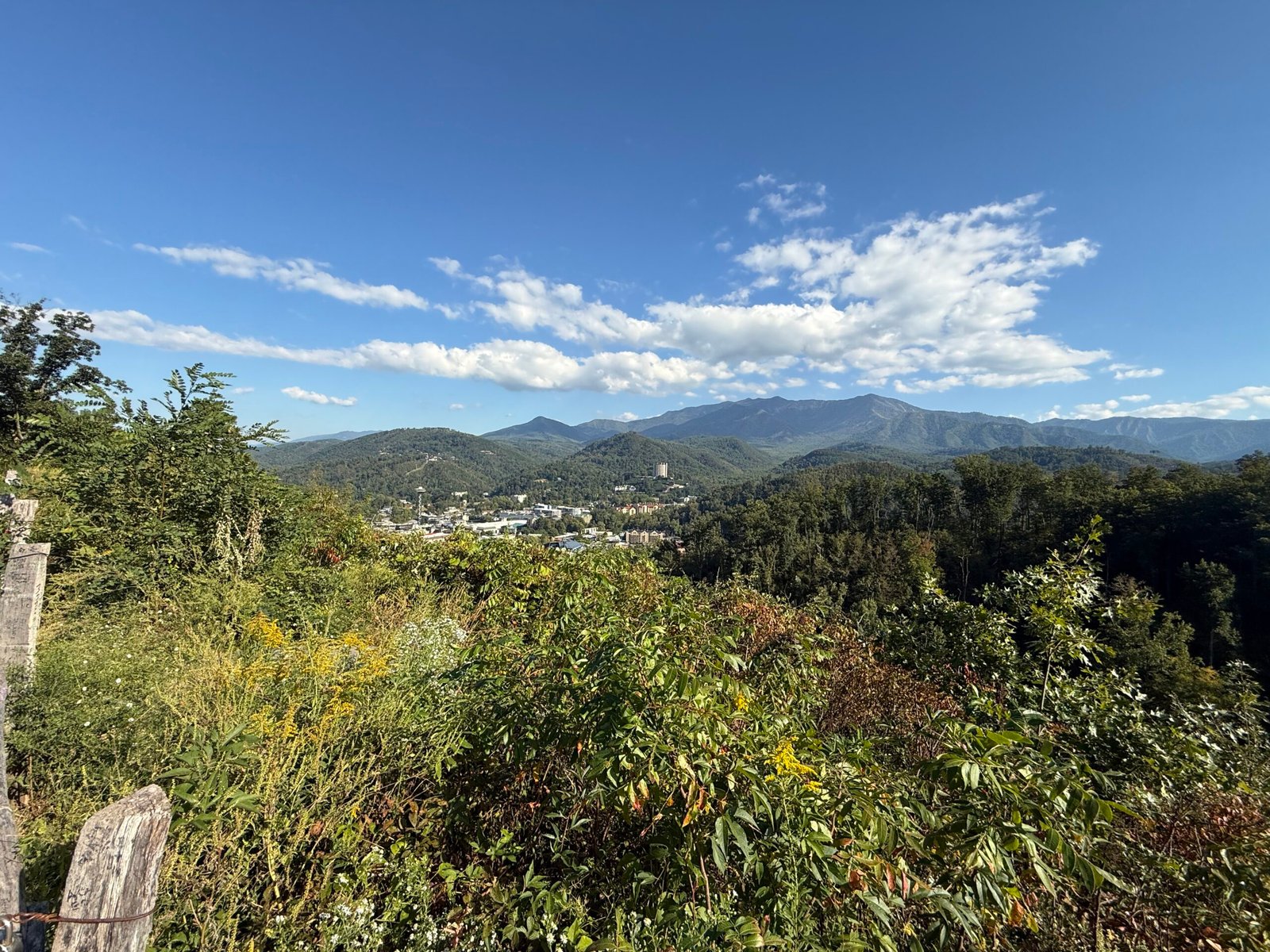
The Great Smoky Mountains have been my happy place for as long as I can remember. As a kid, and well into my teens, we camped here every chance we got; tents at first, and later a pop-up. Somewhere after that I switched to hotel rooms in Gatlinburg, and I stayed in hotel rooms for most of forty years. It had been nearly three years since I’d been down at all, and nearly forty since I last slept inside the park itself.
The camping bug is back now, and with weekday rates and the discount I qualify for, staying in the park simply made more sense. So this year I got in the car and went.
There was a summit I owed myself, and I’ll get to it. Everything else, the campground included, was a sidequest.
The GPS had other ideas about the route. Partway down it switched on me and brought me in through Sevierville and Pigeon Forge, which on an October afternoon means traffic. The better way in is the back door: Wears Valley and Townsend, then Little River Road along the water to Elkmont.
Shadow
Shadow is my Jeep, a Renegade, small enough that “subcompact” is an honest word for it.
Car camping is an adventure unto itself. The rear seats fold down, a mat goes in the back, and a zero-degree sleeping bag goes on top of the mat. A Roadie window tent goes over the windows, with zippered windows of its own. During the day all of it breaks down and stows in the cargo space, and the car goes back to being a car.
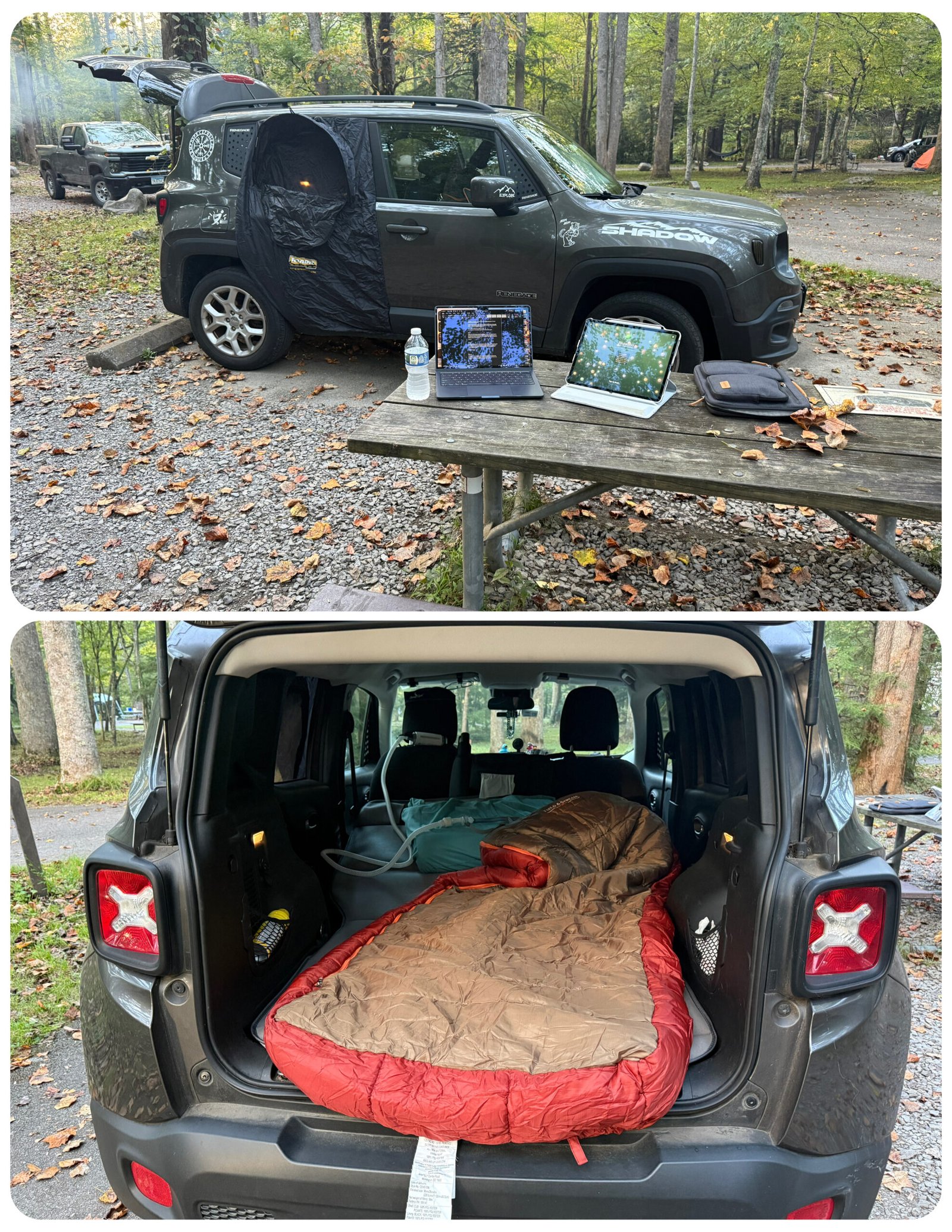
I run a travel CPAP at night, and a laptop and a tablet that would like to be charged by morning. For anyone with a CPAP or electronics, a power station is a must. I went with a larger one, the Anker Solix C1000, at a little over a thousand watt-hours. One night of the CPAP plus charging all my devices used twenty percent of it. I also keep a small RockPals at the house on standby for when the power goes out, because the CPAP still has to run.
That twenty percent was with the CPAP running off its regular wall adapter, because I couldn’t find my DC converter when I packed. Run through the wall adapter, the station turns its battery’s power into AC only for the adapter to turn it straight back into DC, and every conversion costs something. A DC converter sold for both the AirSense 11 and the AirMini plugs into the station’s 12-volt outlet and skips the round trip.
Food was simple this time. I skipped the cooler and the cooking entirely in favor of straight non-perishables: pouches of tuna, a loaf of bread, mayonnaise packets for sandwiches, and a couple of bags of trail mix for when the munchies strike. A case of bottled water covers several days. The Blackstone 2364 tabletop griddle stayed home on this one.
Elkmont
Elkmont was a logging town before it was a campground. The Little River Lumber Company built it in 1908 as a base camp for cutting these mountains, and ran a railroad up from Townsend to haul the timber out. The logging there ended in 1925. Today the clearing along the Little River holds the park’s largest and busiest campground: 220 sites, twenty of them walk-in tent sites.
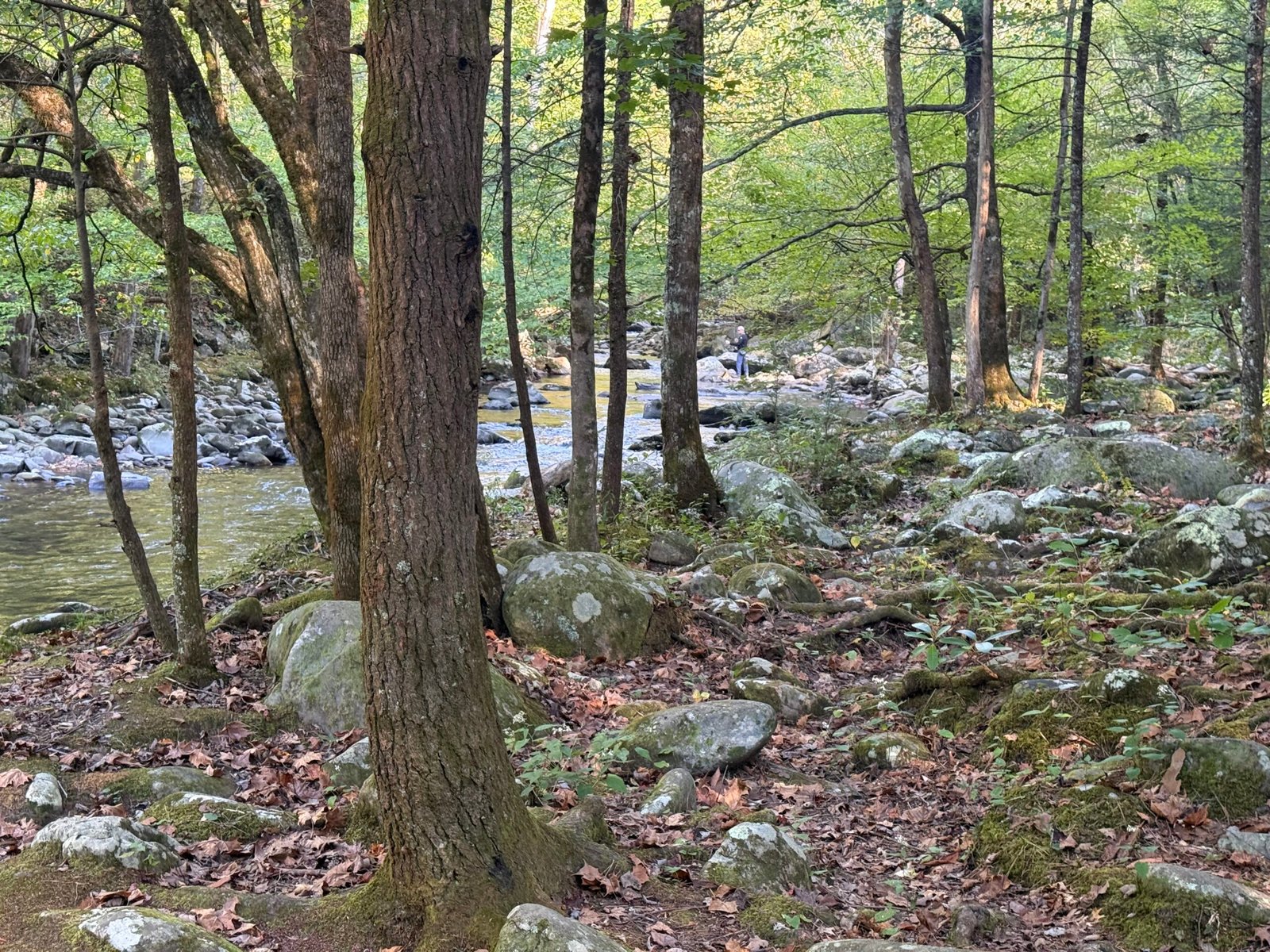
It’s rustic. Flush toilets and cold running water, no showers, and no hookups. The sites are primitive but roomy; plenty of space for a tent, a car, or a camper. The streamside sites are the ones to want. Pay attention to the walk-in sites when you book on Recreation.gov, though. Walk-in means exactly that; there are no parking slips for those sites.
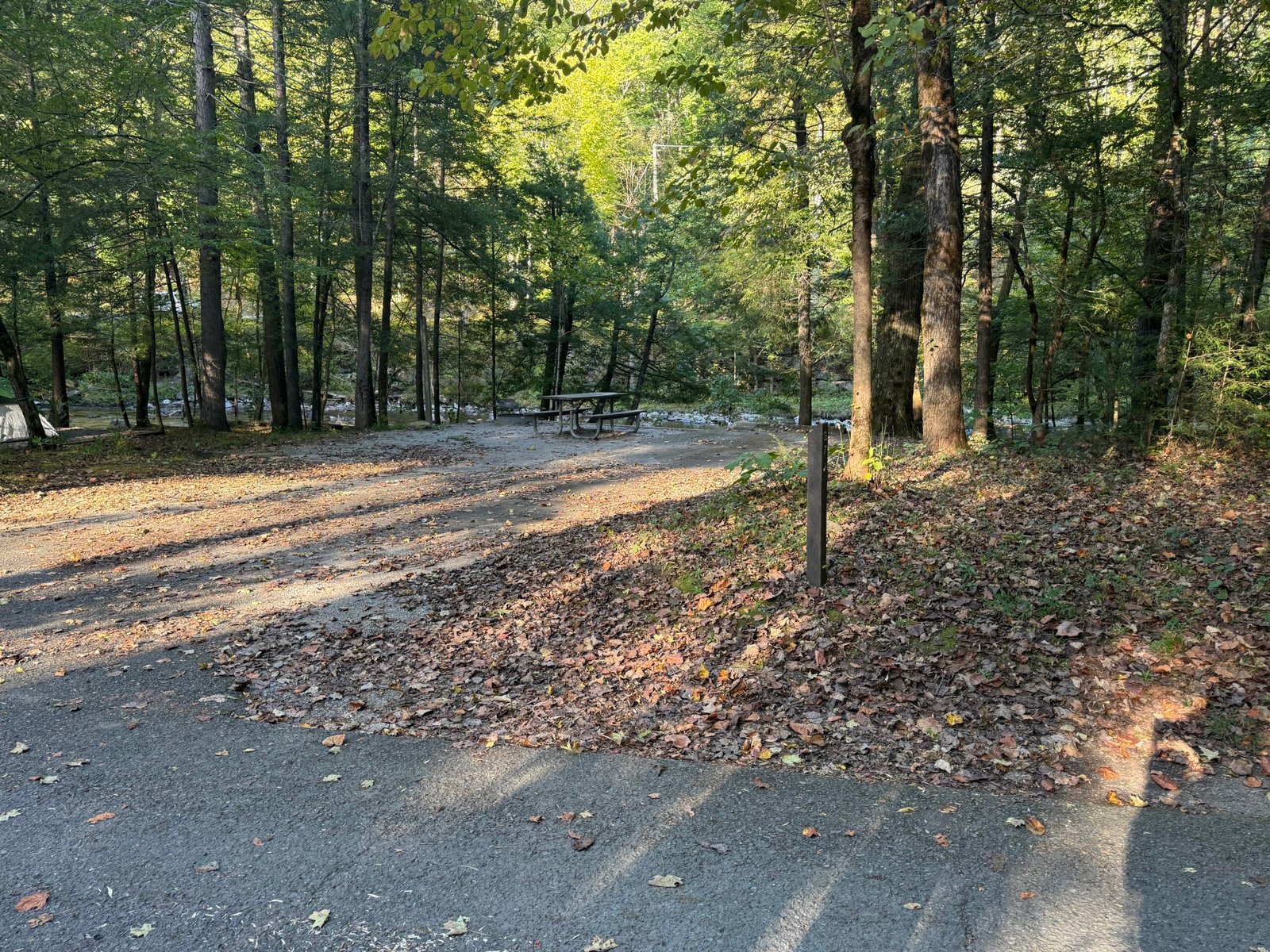
There is a certain quiet you get in the Smokies that I have only found in one other place. I wrote about Gethsemani this summer, a Trappist abbey in Kentucky where most of the retreat house is kept in silence, and where the cicadas and doves and one unidentified something in the underbrush made it plain that silent and quiet are not the same thing. The Smokies have the same quality. The very air is quiet, and it isn’t a silent kind of quiet.
Early in the evening the sounds of civilization are still around. Engines rumble as people come back from a day in the mountains or the tourist strip. There’s chatter around the campfires. Flashlights bob their way to the restroom as people get ready to turn in. The occasional dog has something to say.
In no time at all, though, it settles, and what remains is the chitter of crickets.
That is what you sleep in.
The days are quiet too, even with the comings and goings of fellow campers. If you’re lucky enough to land a spot along the stream, you get the sound of moving water all day and on into the night. Elkmont is well treed, and dappled sunlight works its way down to the sites through the whole day. A folding canopy, a camp chair, and a good book are all it takes to commune with the calm.
At East Fork last month the phone worked fine, and every night I had to put it down myself. Here nobody asks. There is no signal at Elkmont, and the mountains make that call on your behalf.
Elkmont is well placed for getting around the park. Thing is, what if the goal wasn’t to go adventuring at all, or to play tourist? What if it was to sit by the stream with a book, somewhere the cell signal still can’t reach?
Bears
This campground gets regular visits from the park’s wildlife, bears very much included, and the rules show it.
All food, and everything used to cook or store it, has to be sealed inside a vehicle, preferably the trunk, or inside a hard-sided camping unit any time you aren’t using it. That includes coolers, stoves, and pots, plus scented items and water containers. Elkmont has a limited number of food lockers. Improperly stored food can be impounded, and the park’s own bear page puts the penalty for violations at fines up to $5,000 and up to six months in jail.
That same page has a line I didn’t expect: lock your vehicle, because bears can open car doors. No, seriously: they really can.
A ranger told me it goes further at Elkmont. The bears here have figured out the restroom doors, too, and there are signs on them saying so. Keep that in mind when you’re the one standing there at two in the morning with a flashlight.
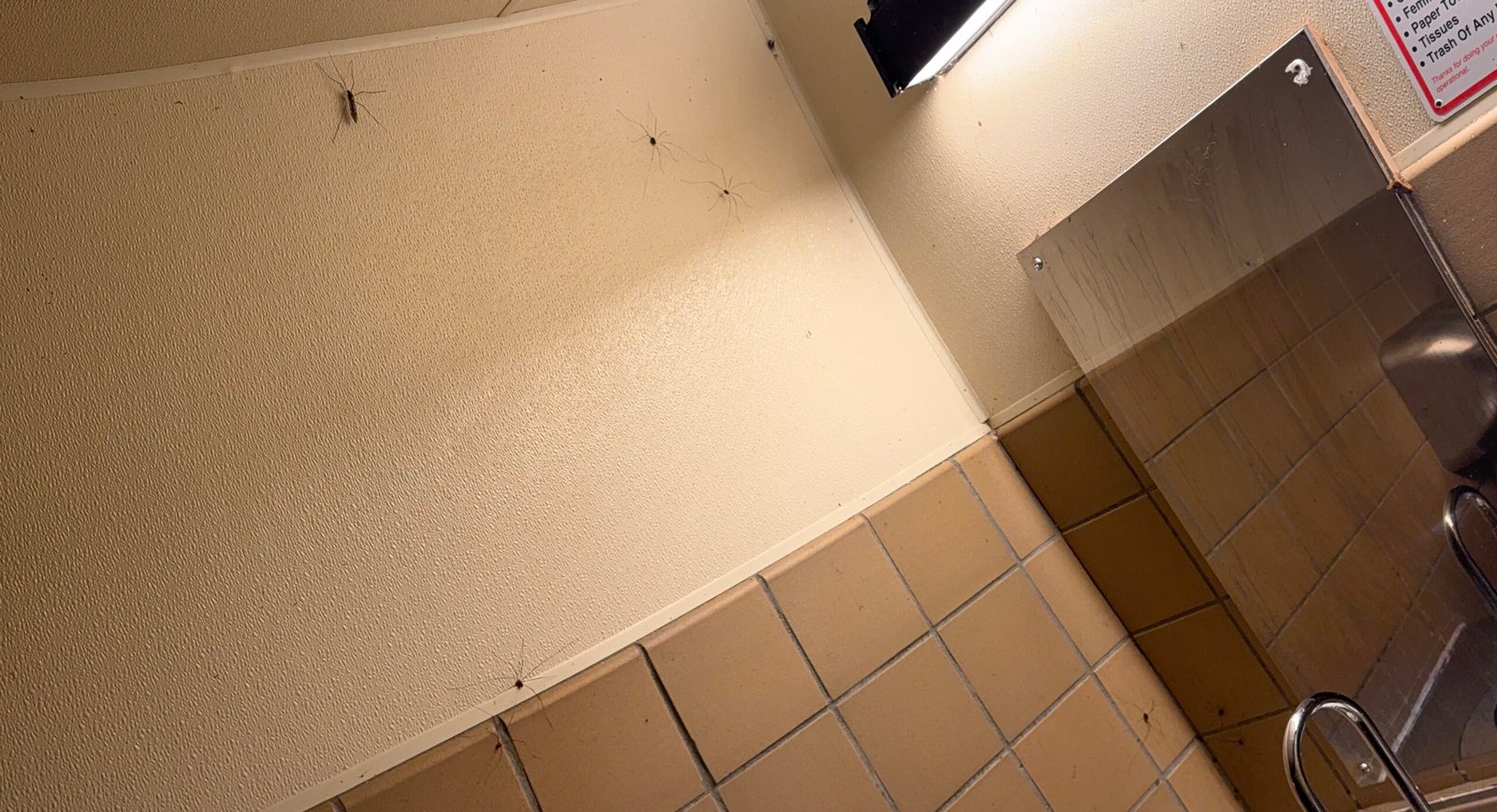
The bears aren’t the only ones who have taken an interest in the restrooms. My first night, the walls inside were covered in daddy longlegs. A billion of them, give or take. I have never seen anything like it, anywhere. It looked like a convention, or maybe a planning session for taking over the campground; I couldn’t tell which.
The Walkabout
As always, I went for a walkabout once I was set up.
My first stop was a fellow with a fifth wheel better than thirty-five feet long. I could not believe he had hauled that beast all the way up here. He had two dogs in a pen outside his front door, and they were very unhappy to see me until they decided their dog dad had things in hand. He was down from Virginia. We talked about the price of gas; hauling that rig, his 6.4-liter Hemi gets eight or nine miles to the gallon. I didn’t mention that Shadow’s little four-cylinder had pulled 24.5 the whole way down, but it made me kind of glad.
Next I came across a fellow down from Knoxville with his wife. He had a Starlink dish set out on the site, and I asked how it was doing under all those trees. Not too bad, it turned out. A speed test showed him pulling an inconsistent hundred megabits down, more than enough for basic work; he’d been watching YouTube. He told me the Starlink Mini had not fared so well and the full-size dish did better.
That matters, because there is no cell signal down here. The park says so itself: for the most part, cell service is non-existent. The TravlFi router I carry, which didn’t miss a beat at East Fork, would have been a waste of cargo space on this trip. Apart from the visitor centers at either end of the park, Sugarlands on the Gatlinburg side and Oconaluftee on the Cherokee side, the only place I found reception was the parking lots at Newfound Gap and Kuwohi, and even there it was touch and go. Then again, the lack of connectivity is a selling point for this place, not a flaw.
As we talked, he told me about a part of Elkmont most visitors never see, a place called Daisy Town.
The way he told it, a number of wealthy folks from Knoxville built cabins up here back in the 1930s. They’re the reason the native brook trout got pushed up into the high country: they wanted better fishing, so they trucked in barrel after barrel of rainbow and brown trout, neither of which belongs in these streams, and people have been trying to clean the streams up ever since. They built a dam to make a swimming hole. The cabins passed down through families for generations until the Park Service closed it all down sometime in the late eighties. There are still cabins up there, he said, and some are pretty solid even now; there’s one you can hike about a mile to, and a ballroom that still gets rented out.
He had the gist of it right. Some of the details turned out to be a little different, and the differences are interesting in their own right.
Daisy Town is real, and the Knoxville part is true. It began earlier than he said, though, and before the park existed at all. The lumber company leased land to the Appalachian Club, a club of prominent Knoxville men founded in 1910, as a hunting and fishing retreat. Between 1910 and 1935 almost eighty cabins went up. When the park came, the owners kept lifetime leases, and nearly all of them ran out at the end of 1992.
The trout story is where it gets ironic. The decline is real; the Park Service says brook trout have lost about three-quarters of their range in the park since the early 1900s, mostly because of logging and the introduction of non-native rainbow and brown trout. But it doesn’t pin the stocking on the cabin owners. Some of it was anglers in general, and some of it was the park itself, which ran a rainbow and brown trout stocking program from 1934 until 1975. It has spent the years since removing rainbows from some streams and putting brook trout back.
As for the rest, the dam was real, rocks and logs, and has since washed out. His ballroom is the Appalachian Clubhouse, still rented out for gatherings, and the cabin a mile up is almost certainly the Avent Cabin on the Jakes Creek Trail. And he was right that the buildings are solid: nineteen were kept, and their restoration was finished in 2024.
I didn’t make it up there. Daisy Town goes on the list for next time, along with the Jakes Creek Trail.
He still told it better than the record does.
The Road Up
I was at Sugarlands Visitor Center by eight the next morning. It’s the first park facility you reach coming in from the Tennessee side, and it’s the place to take care of the one piece of business the Smokies now require of you: a parking tag. If you park anywhere in the park for more than fifteen minutes, you need one. That means you, hikers.
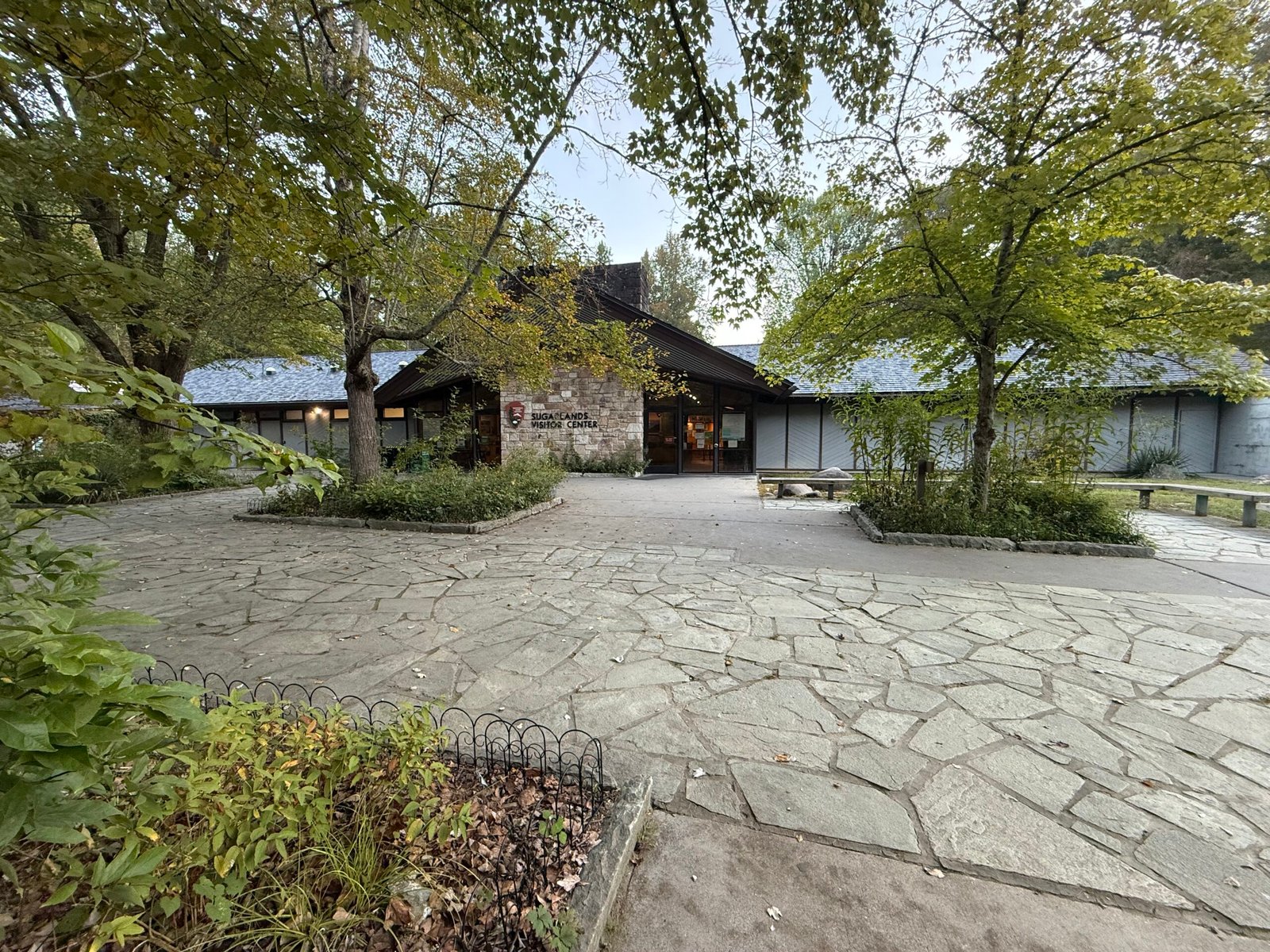
From there, Newfound Gap Road climbs toward the crest. There’s an overpass on the way up that is my favorite spot on the whole road, and I stopped.
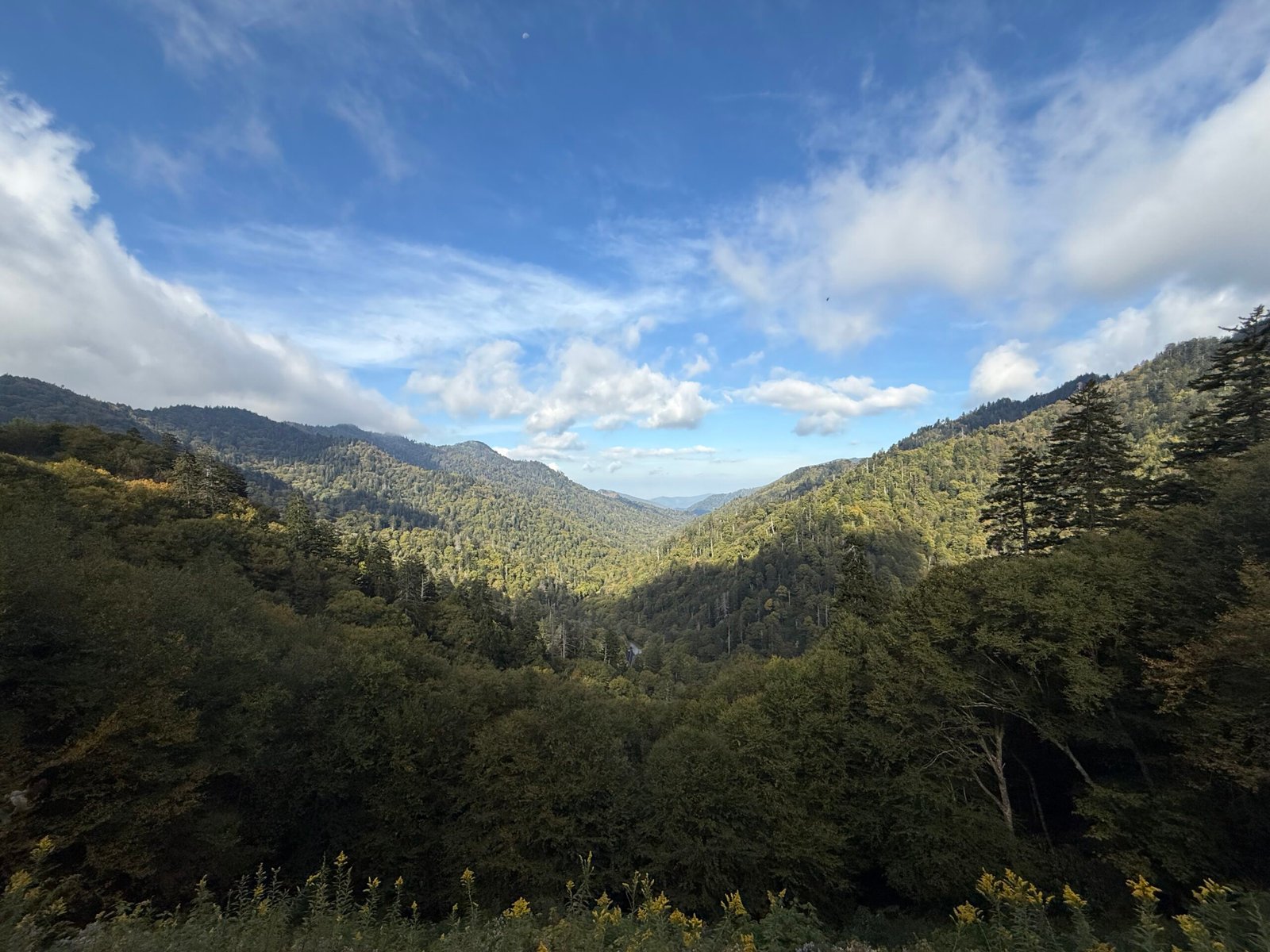
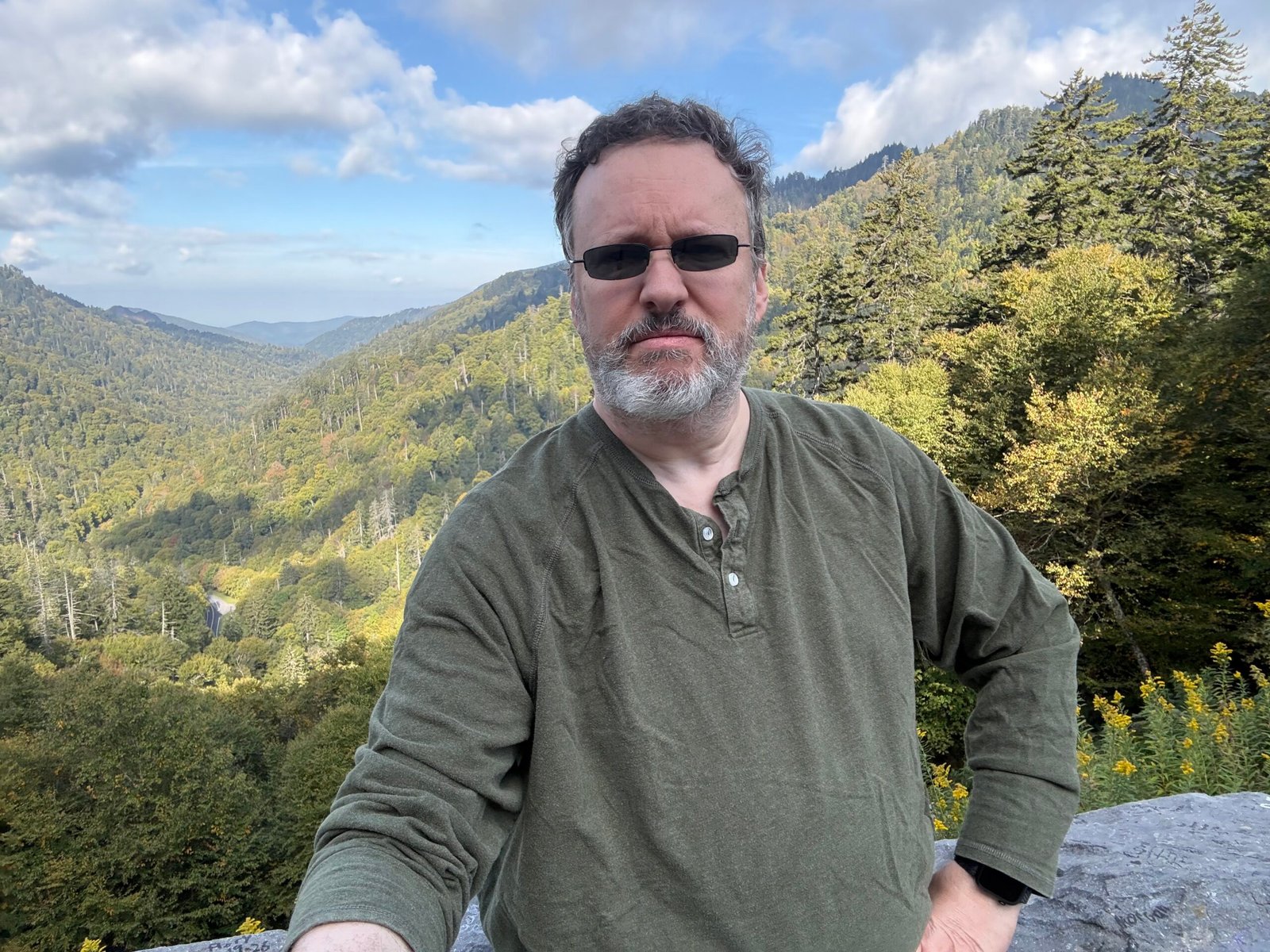
Newfound Gap sits at 5,046 feet, right on the Tennessee–North Carolina line. The stone terrace there is the Rockefeller Memorial, and it’s where Franklin Roosevelt formally dedicated the park on September 2, 1940. The memorial straddles the state line; you can stand with a foot in each.
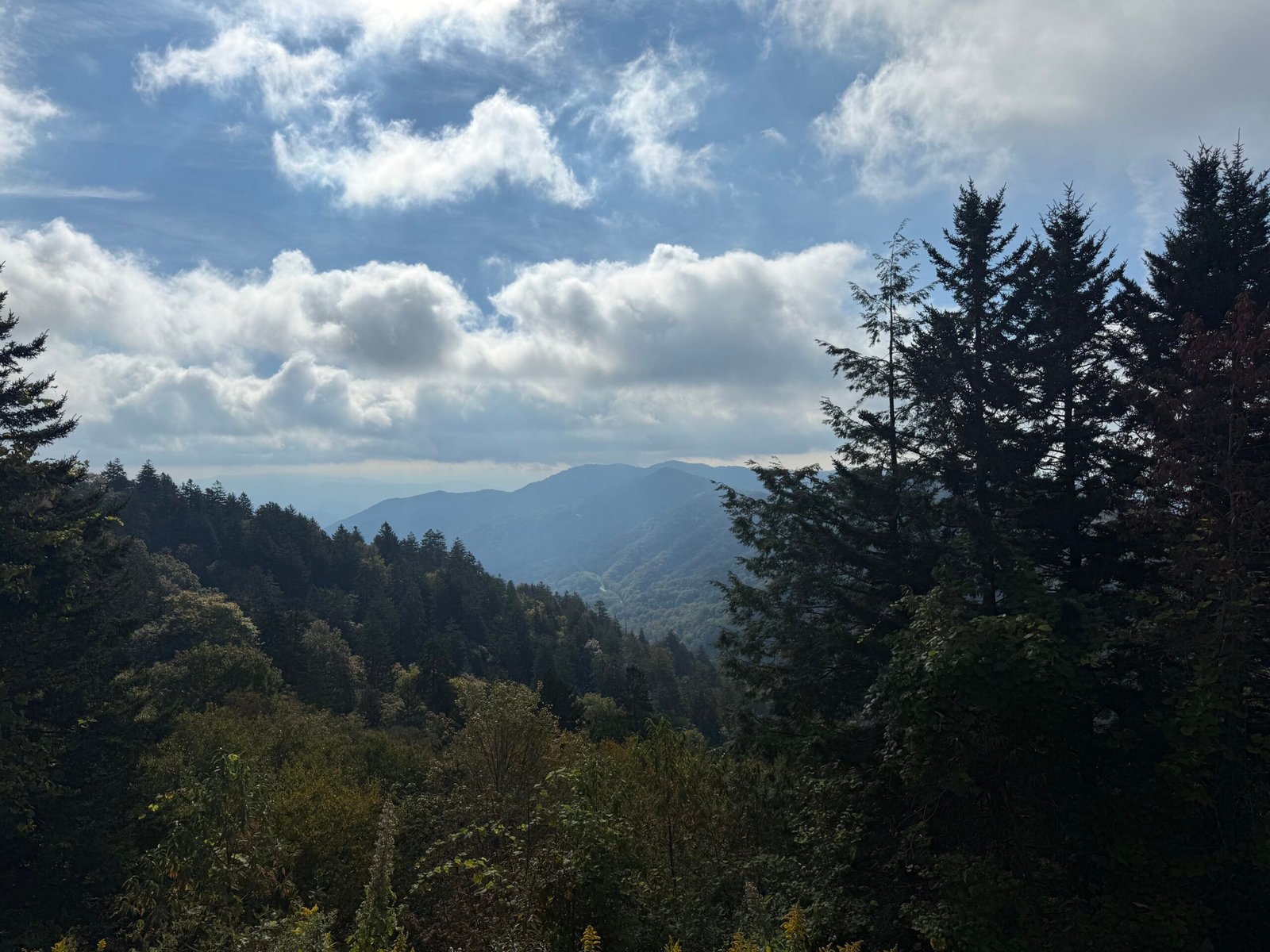
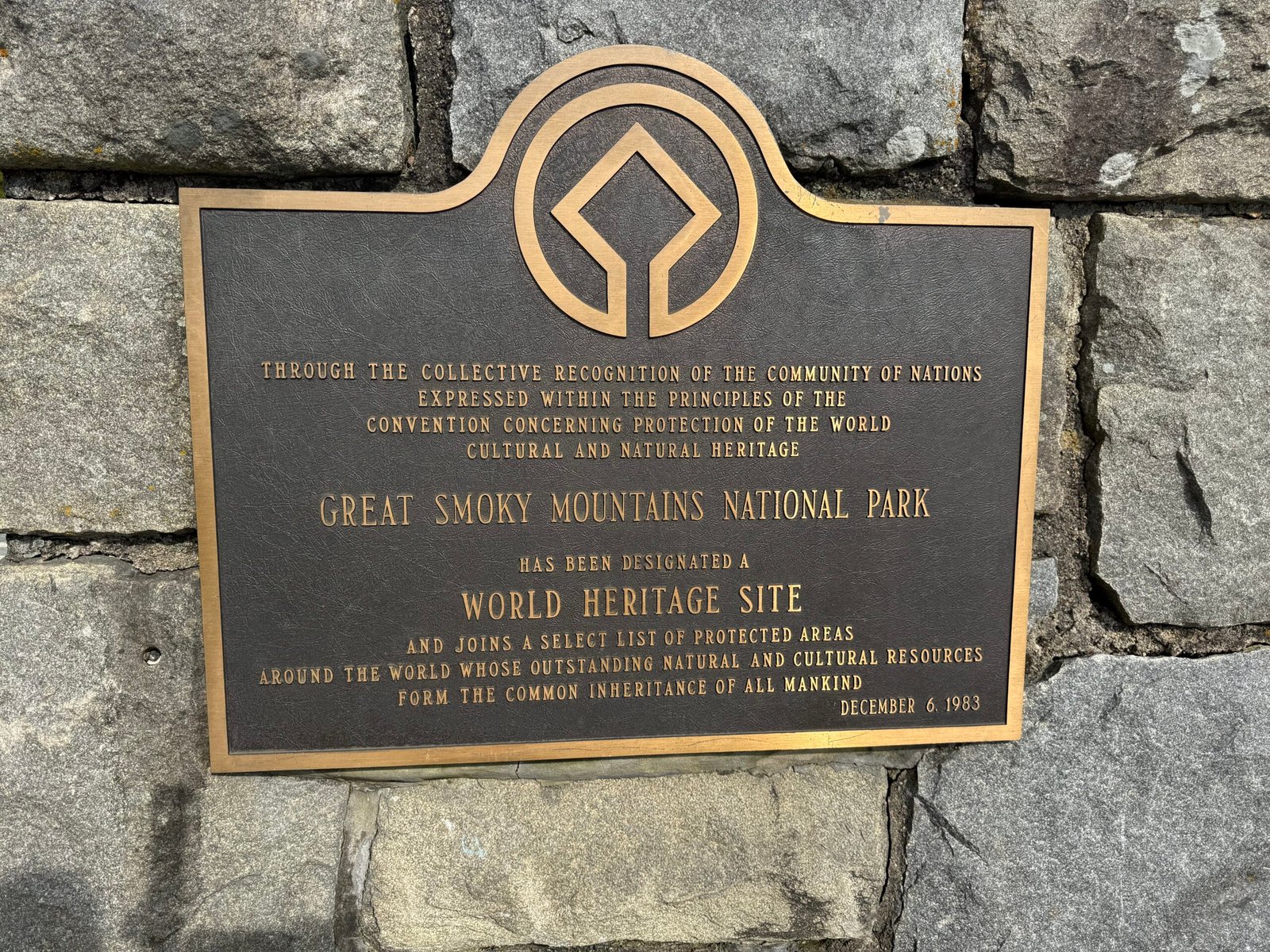
Then the turn onto Kuwohi Road, seven miles out along the ridge to the top of the park.
Kuwohi
When I was lying in a hospital bed waiting for a donor heart, I made myself a promise. I would celebrate my first year of extended life by coming to the Smokies in early autumn of 2025 and making the climb to Clingmans Dome.
Instead, friends invited me up to New York and Connecticut, and I went. I had a great time.
That left the climb sitting there as an unchecked box, and I couldn’t leave it that way. So in addition to scouting Elkmont and visiting my happy place, I went straight for the summit.
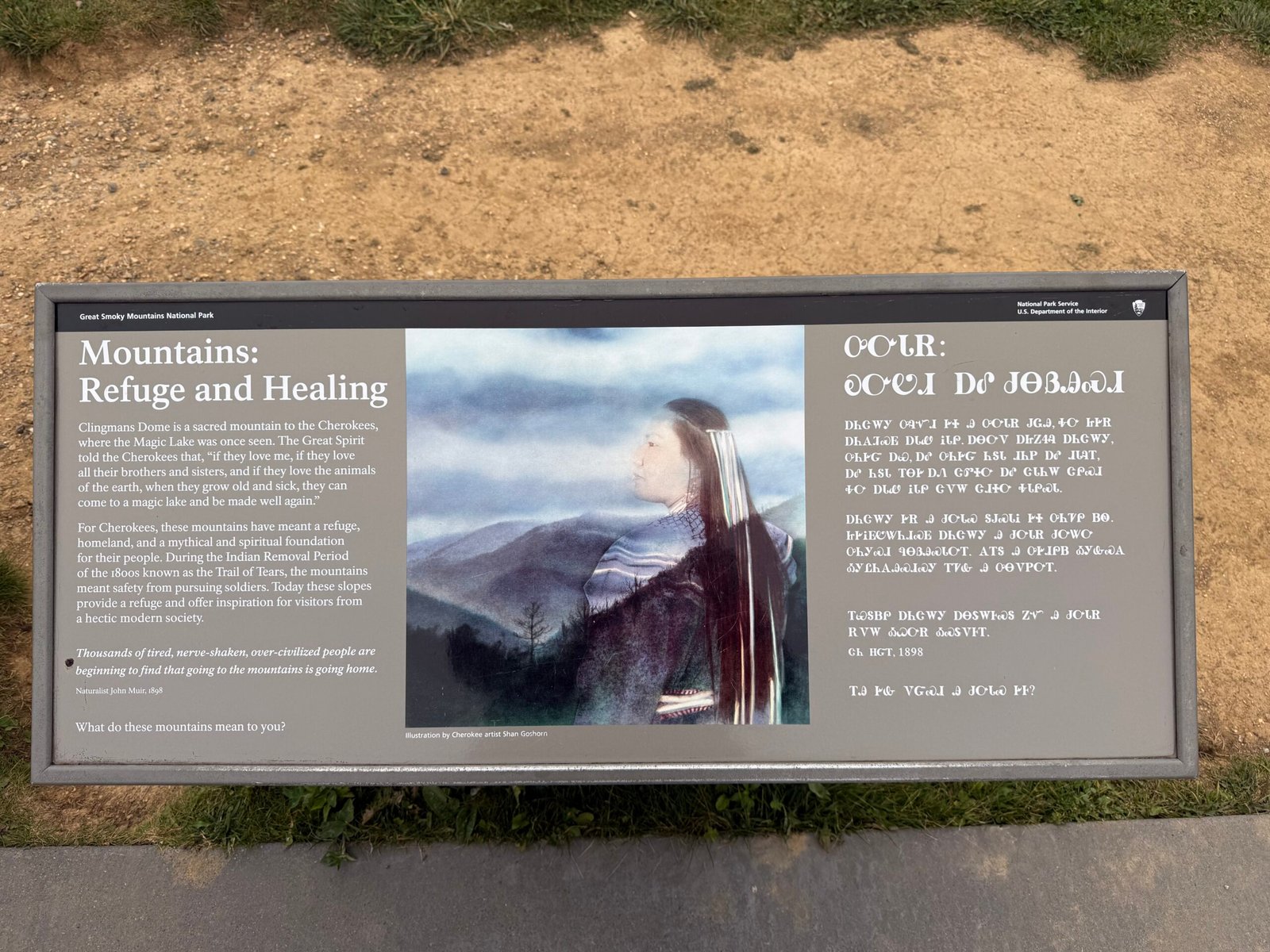
It has its old name back now. In September 2024, the same month I went into the hospital to wait for a heart, the U.S. Board on Geographic Names voted to restore the Cherokee name Kuwohi, at the request of the Eastern Band of Cherokee Indians. It means “mulberry place.” The mountain is sacred to the Cherokee, and members of the Eastern Band had pushed for the change since 2022. The name it carried for a century and a half came from Thomas Lanier Clingman, a North Carolina congressman and senator who went on to be a Confederate general. The road up was renamed with it.
New name or old, it’s 6,643 feet, the highest point in the park, the highest in Tennessee, and the highest point anywhere on the Appalachian Trail. The paved trail from the parking lot to the observation tower is half a mile. The park calls it very steep, and it climbs better than three hundred feet in that half mile. That is tough for just about anyone, let alone a guy who is out of shape and running on a transplanted heart.
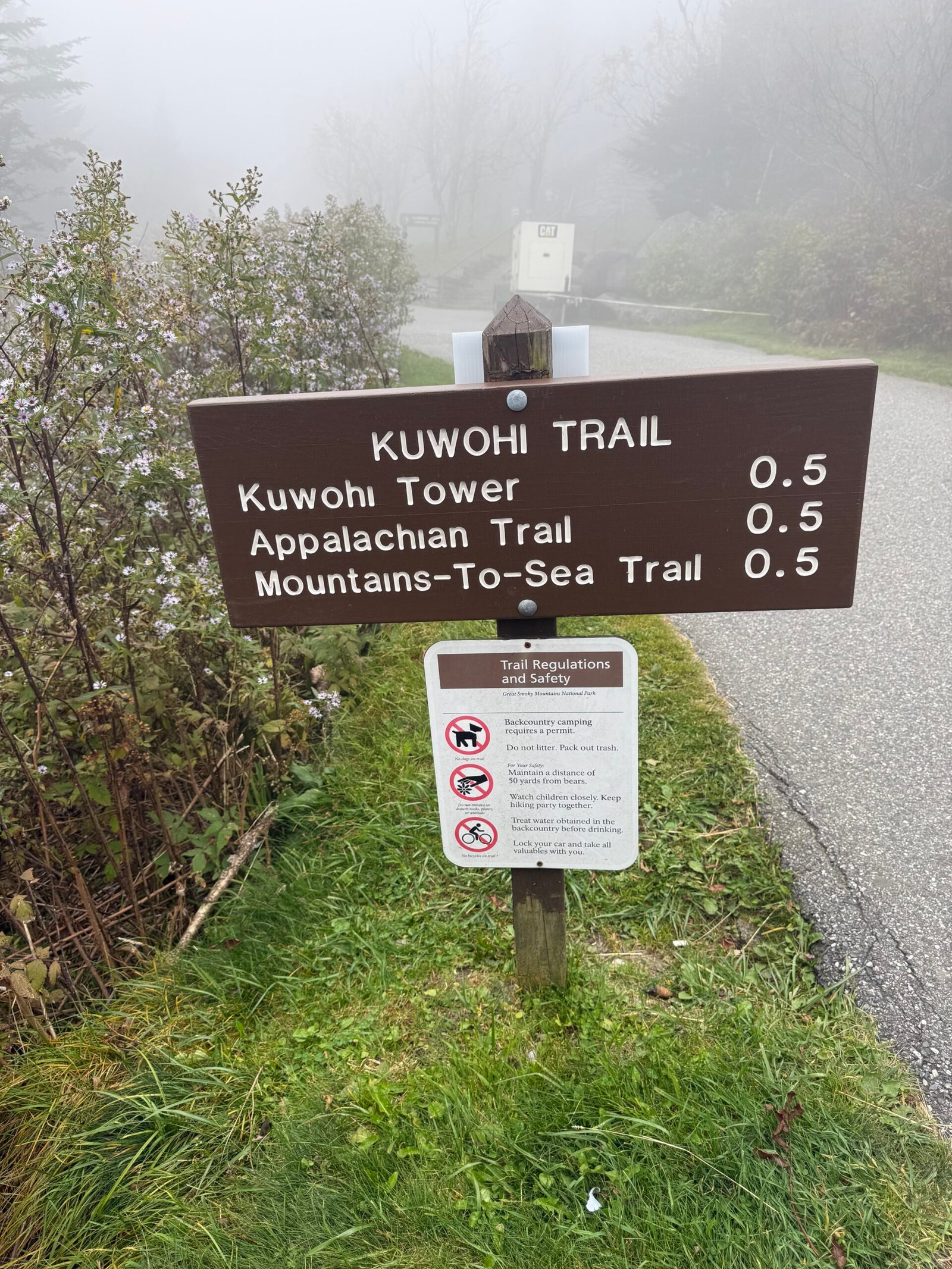
And yet I did it. Every tenth of a mile or so, when my heart rate popped 140, I stopped and let it come back down before going on. It took me a bit longer than some. There were plenty of younger folks resting on the way up too, so I don’t feel too bad about it.
That box is now checked.
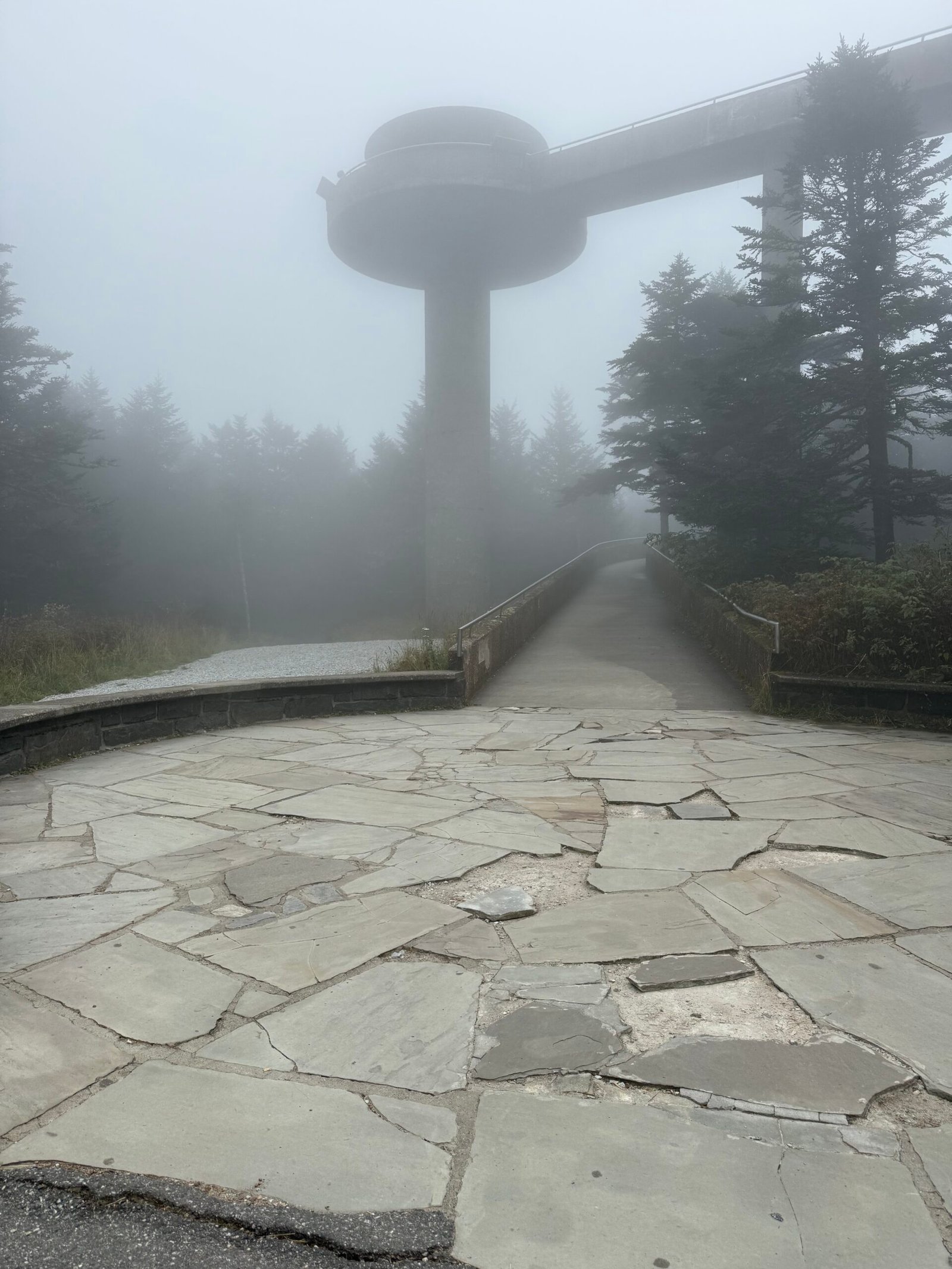
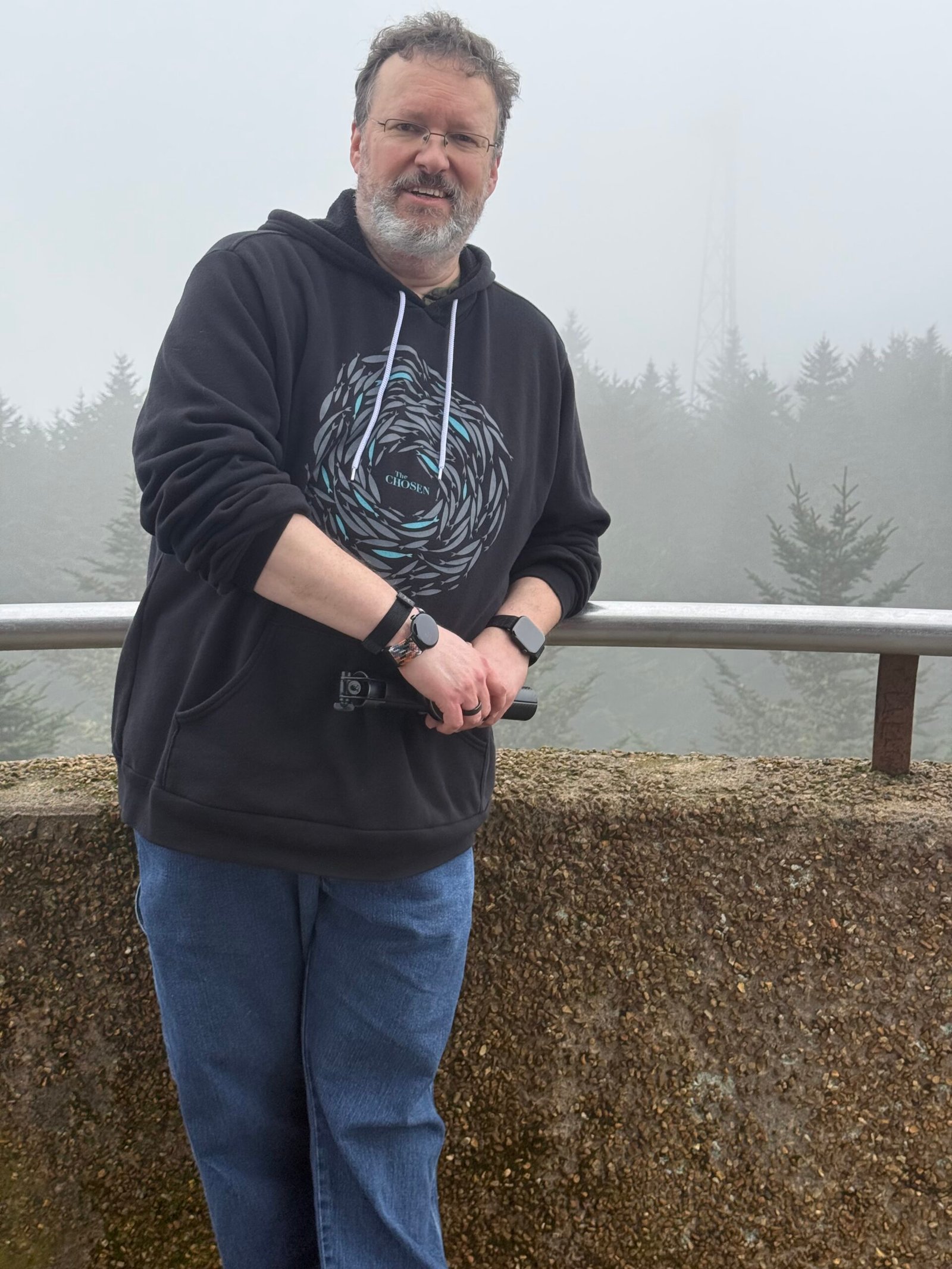
It was cloudy, thick cloudy, even with noon coming on, so I didn’t get much in the way of pictures. On a clear day the park says the view runs past a hundred miles. Even on a decent day, air pollution often holds it under twenty. This was not a decent day.
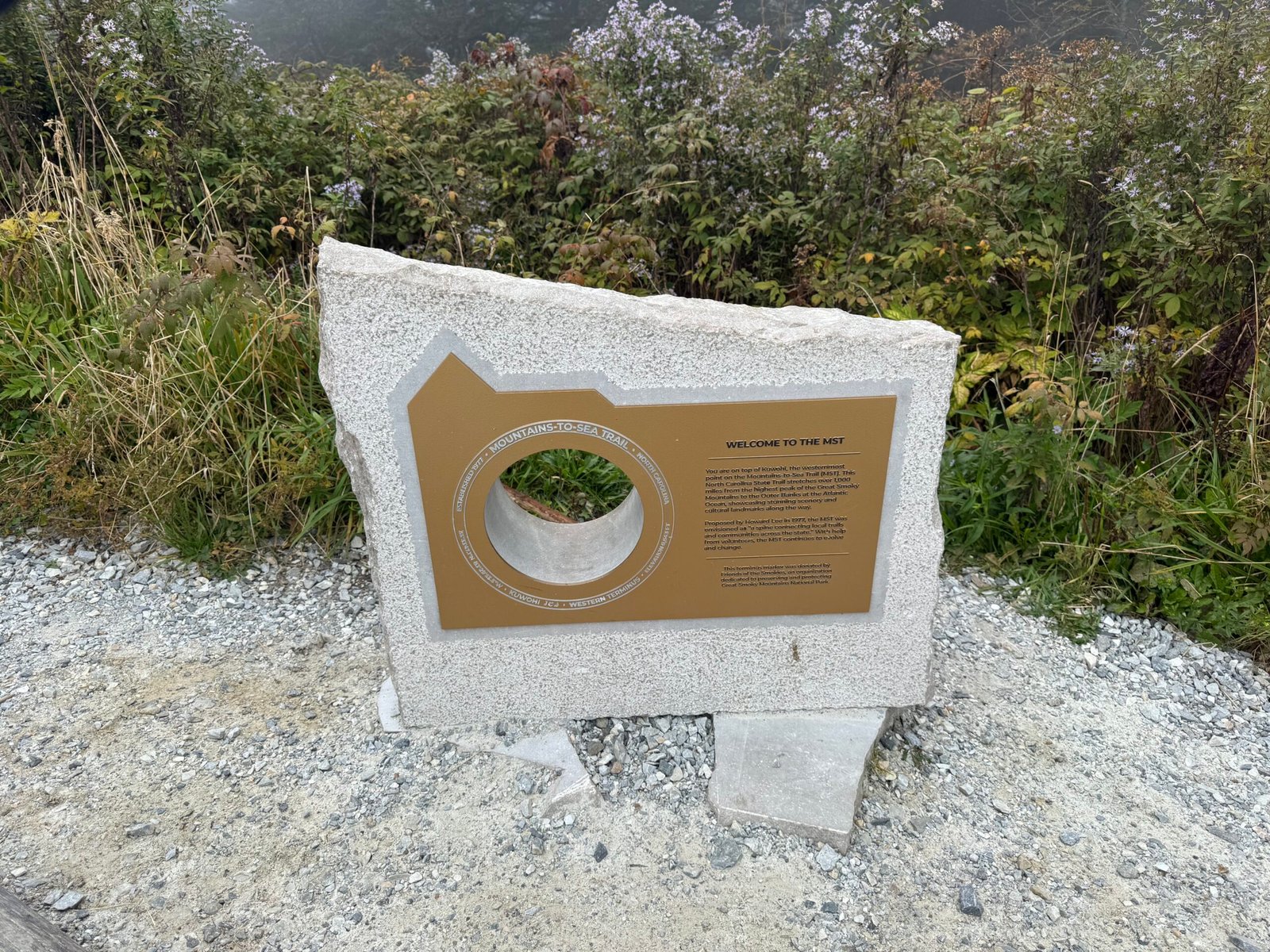
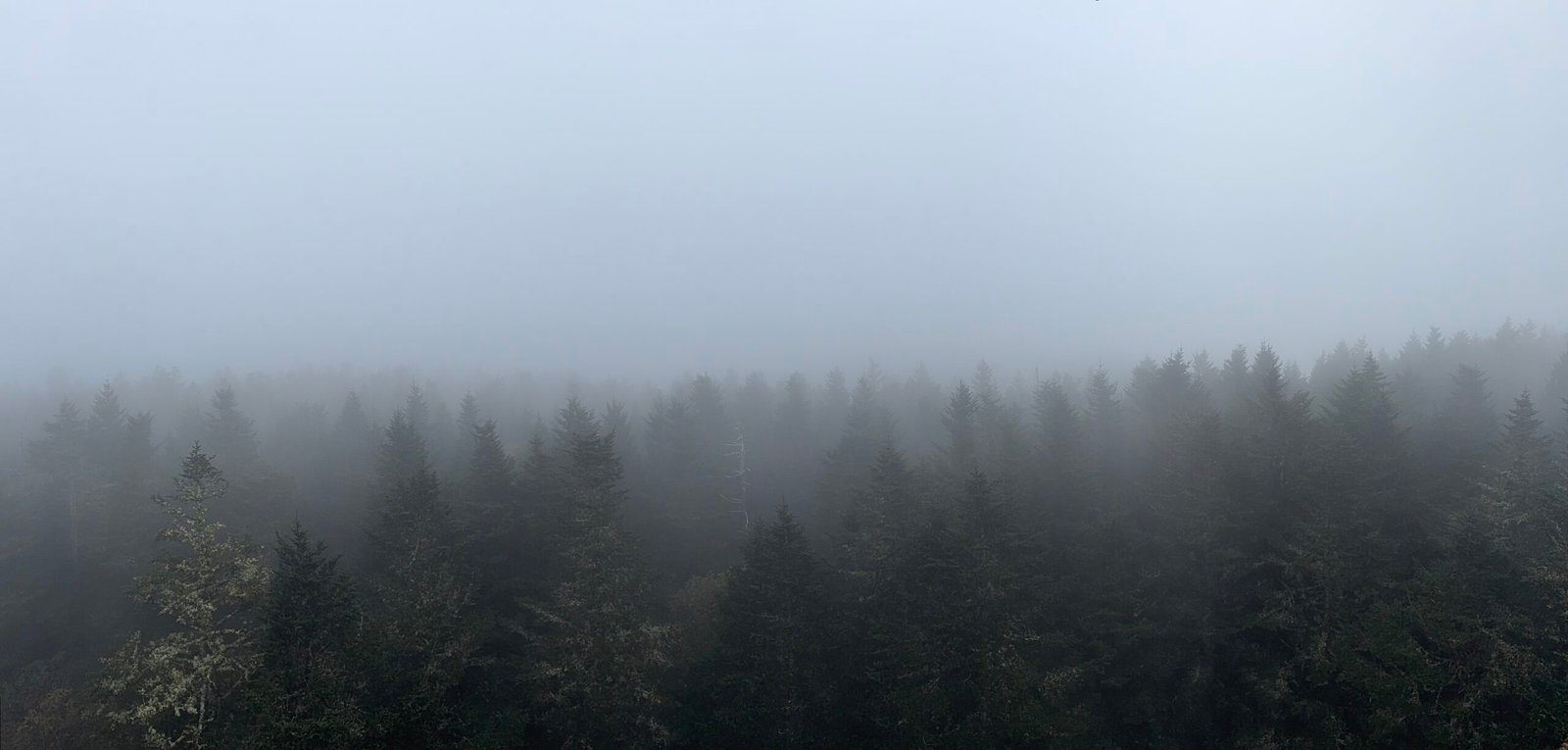
I remember standing up here as a teenager with my dad. He looked at the map on the information boards, then out over the supposed four states, and said, “Well, this doesn’t work. How come I don’t see any lines out there?”
Truly one of the ultimate dad jokes ever.
This was the same man who’d been my cubmaster, the guy loading up the car with sleeping bags and a cooler. More than forty years later I looked out from the same spot, and it was so cloudy I couldn’t tell whether anybody had ever gotten around to painting those lines.
I remembered him again while writing this and laughed, and a tear came to my eye. He was an amazing dad, and I miss him every day.
Guess I’ll have to go back up when I come down in the spring, just to see if they ever painted those lines.
Practical Notes
Getting there. From the north, skip the GPS’s preference for Sevierville and Pigeon Forge if you can. The quieter way in is through Wears Valley and Townsend, then up Little River Road to Elkmont. Coming in the back way through Wears Valley, it’s worth a stop at the Little Greenbrier School, a log schoolhouse from the 1880s that also served the community as its church, with a cemetery beside it. Little Greenbrier Road, a short gravel road off the road between Wears Valley and Metcalf Bottoms, leads to it and closes in winter; the Metcalf Bottoms Trail reaches the school on foot year-round.
Elkmont Campground. Reservations are through Recreation.gov. As of October 2026, sites run $30 a night. The America the Beautiful Access Pass and the Senior Pass take half off camping; I paid $15. There are flush toilets and cold running water, and no showers or hookups anywhere in the campground. Twenty of the sites are walk-in tent sites, so read the site description before you book. Streamside sites are worth the effort. Elkmont is seasonal; only Cades Cove and Smokemont stay open year-round.
Bears. Store all food, cookware, coolers, scented items, and water containers sealed in a vehicle or hard-sided camper whenever they aren’t in use. Lock your car. The full rules are on the park’s campground regulations page.
Parking tags. Any vehicle parked in the park for more than fifteen minutes needs one. As of October 2026 they run $5 a day, $15 a week, or $40 a year, and they’re tied to a license plate. Buy one at a visitor center or on Recreation.gov before you head for a trailhead, since most trailheads don’t have tag machines. America the Beautiful passes, including the Access and Senior passes, do not cover parking tags. Vehicles with a disability placard or plate are exempt; confirm the details on the park’s fees page.
Connectivity. Plan on none. I found reception only at the Sugarlands and Oconaluftee visitor centers and, unreliably, in the parking lots at Newfound Gap and Kuwohi. One camper told me his full-size Starlink dish was holding up under the trees at Elkmont, and that his Mini hadn’t fared as well.
Power. I use the Anker Solix C1000; my preferred brand is Anker these days. The Jackery Explorer 1000 v2 is the other one you’ll see everywhere. I didn’t buy one, but it’s a perfectly good choice and a very popular one. At the time this publishes, Amazon is running another Prime Day sale, and both are on sale, along with bundles that include solar panels. If you run a ResMed AirSense 11 or AirMini, get the DC converter, and remember to pack it.
Kuwohi. Kuwohi Road is seasonal; in 2026 it is open April 1 through November 29, weather permitting. The trail to the tower is a paved half mile and steep. Take it at your own pace, rest when you need to, and bring a layer; the summit runs well cooler than the valleys.

Discover more from Rogue Wayfarer
Subscribe to get the latest posts sent to your email.
Great write up with good information. Thanks for sharing with us.