
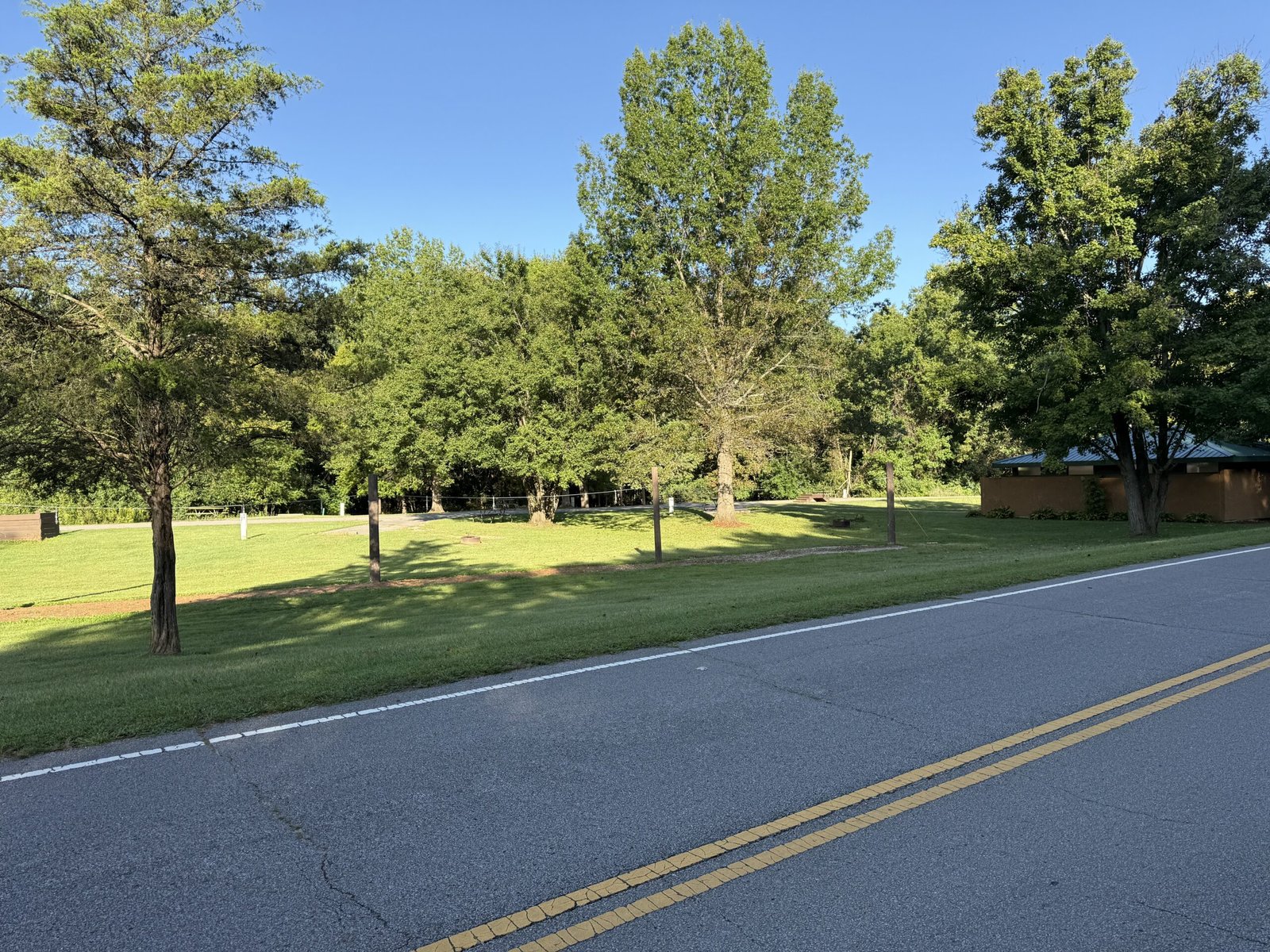
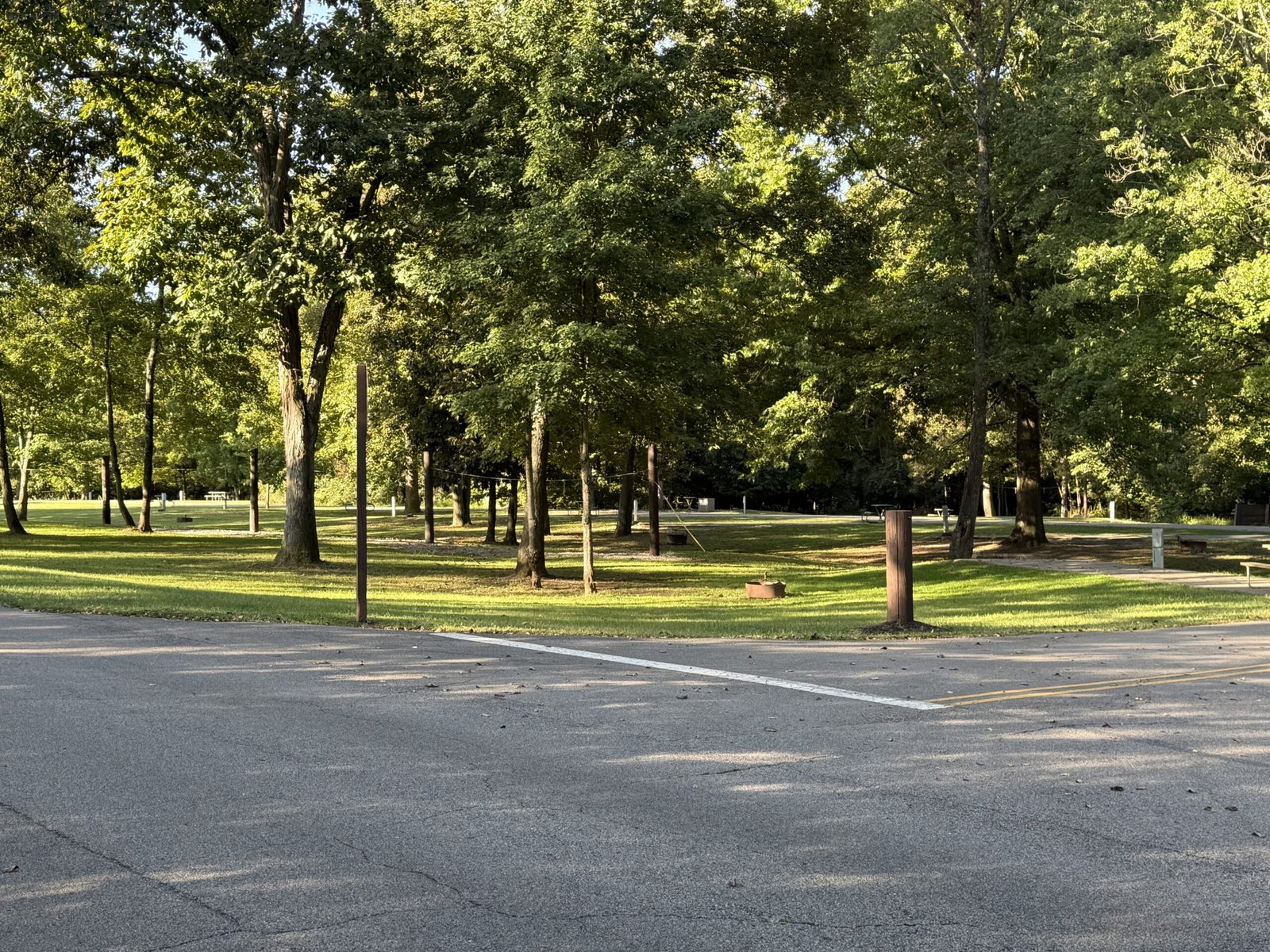
Four brown posts stood in the grass behind the shower house with a wire strung between them, and I photographed them because I photograph things. I had no idea what they were.
It was my first morning at East Fork, walking a park I had never walked, taking the kind of pictures you take before you know which ones will matter. Trees, roads, buildings, signs. The posts were in a shaded run among the trees and I framed them as part of the trees. Somebody had put them there on purpose and had gone on cutting the grass around them, so they were not abandoned; they were simply unexplained, and I let them stay that way.
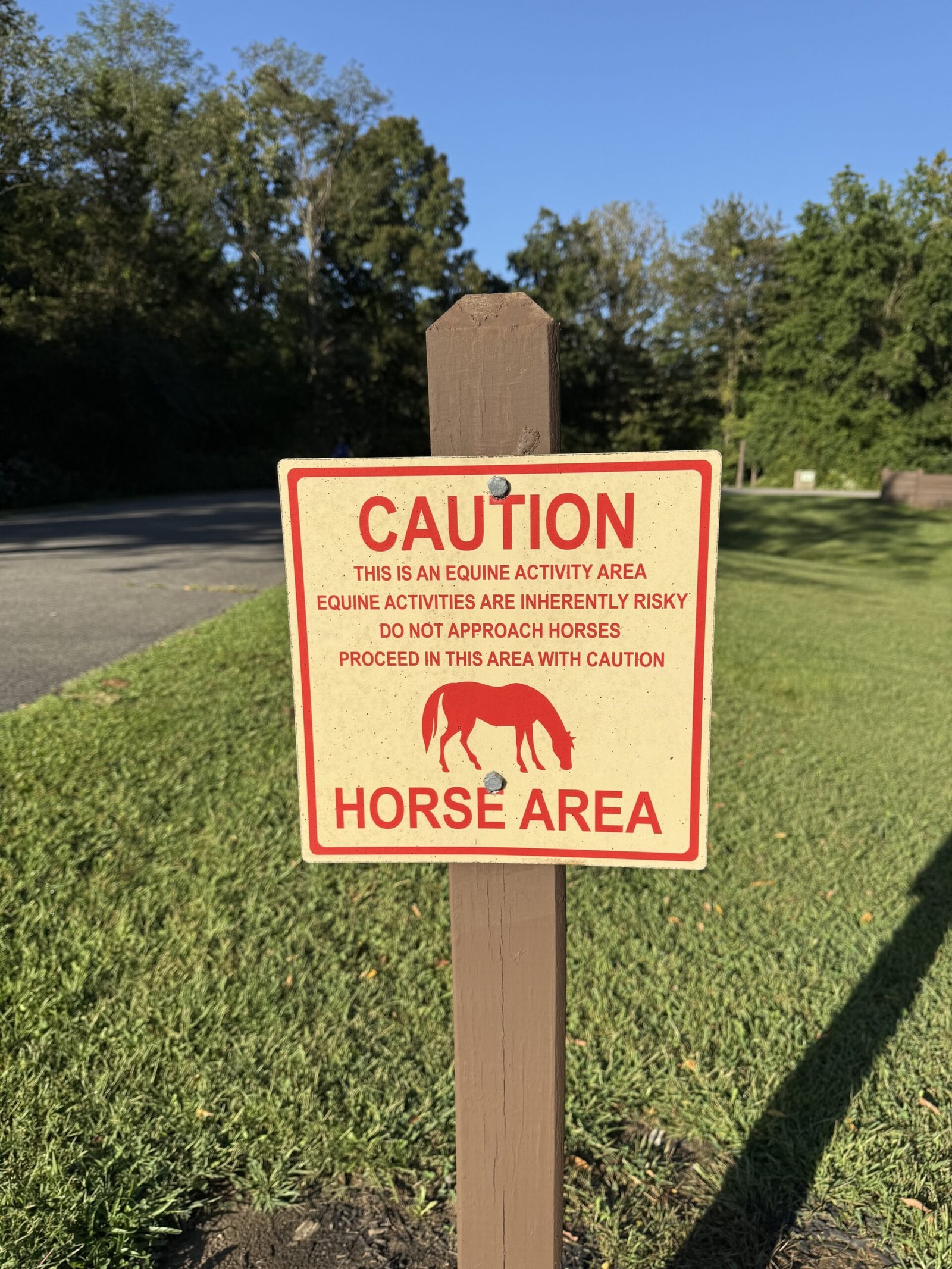
I came to this park knowing it had horses. Minutes after I photographed those posts I photographed a sign reading CAUTION, HORSE AREA, DO NOT APPROACH HORSES, and a little farther along, three separate signs showing a horse and rider crossing the road. I took all of it, and I walked past it for two more days.
That is more or less what these first trips are for. Find out what is here. Come back for it later.
East Fork is about twenty-five miles from the house, close enough that getting there hardly counts as going anywhere, and that was part of what I wanted to test.
The Ground Around the Water
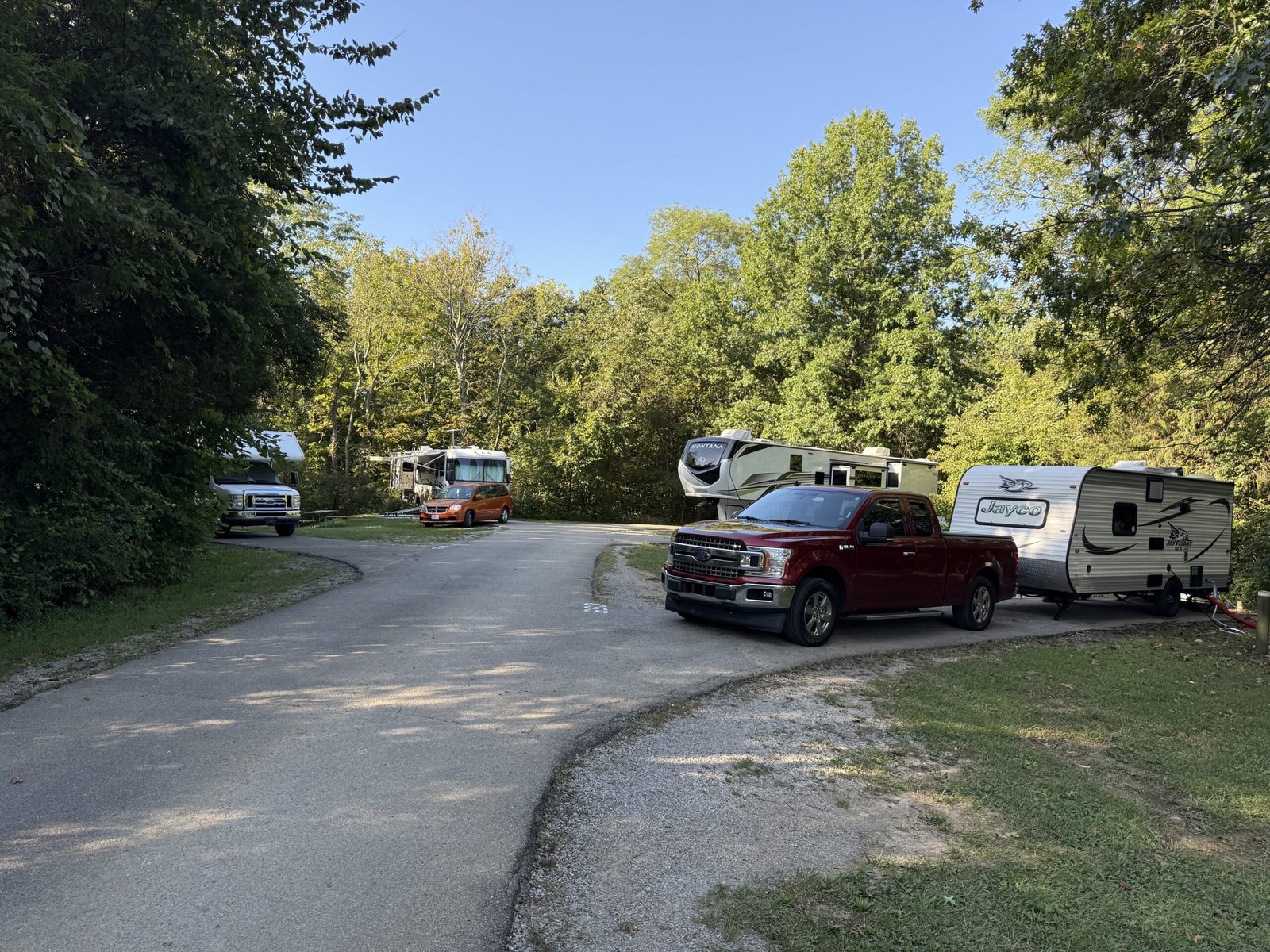
The canopy is the thing here, and in September it is doing real work. At two in the afternoon the difference between a shaded site and the open ground fifty feet away is the difference between sitting outside and going in. The sites have room around them as well; the open sections are decent enough, though my enthusiasm for an unobstructed view of the sun runs thin this time of year.
The place is maintained to a standard you notice. Grass cut, buildings kept up, the grounds tended rather than merely swept. A campground can be well laid out and still let go; this one is doing both jobs.
The week had a shape to it. The weekday crowd started thinning on Wednesday and most of them were gone by Thursday mid-morning. Thursday afternoon the weekend crowd began arriving, some of them well after dark, and by the time I left on Friday the horse loop was full and the rest of the park was going the same way. In between, the place was about as quiet as I have found anywhere with that many people in it. They had dogs and vehicles and things to carry. None of it took up the whole park. You could hear a campground without having to attend somebody’s entire evening.
All of this ground is public because of the water. William H. Harsha Lake is a 2,107-acre reservoir on the East Fork of the Little Miami, authorized under the Flood Control Act of 1938 and built and operated by the Louisville District of the Army Corps of Engineers. It is named for the congressman who represented this part of Ohio from 1961 to 1981. The state park around it runs to 4,870 acres and dates to 1978.
I like knowing that. The lake has a job whether or not anybody launches a boat on it; the woods and the trails and the quiet evening are what the rest of us get because the water needs somewhere to go.
The World Walker
Near the nature center there is a kiosk holding two panels. One is the park trail map. The other is headed THE WORLD WALKER, which seemed like a lot for a campground sign.
Steven Newman is from Bethel, the next town over. From April 1983 to April 1987 he walked around the world by himself, roughly twenty-one thousand miles of it, and wrote Worldwalk about it in 1989. The trail that rings this lake is named for him. It runs thirty-three miles and it is the longest trail in Ohio’s state park system.
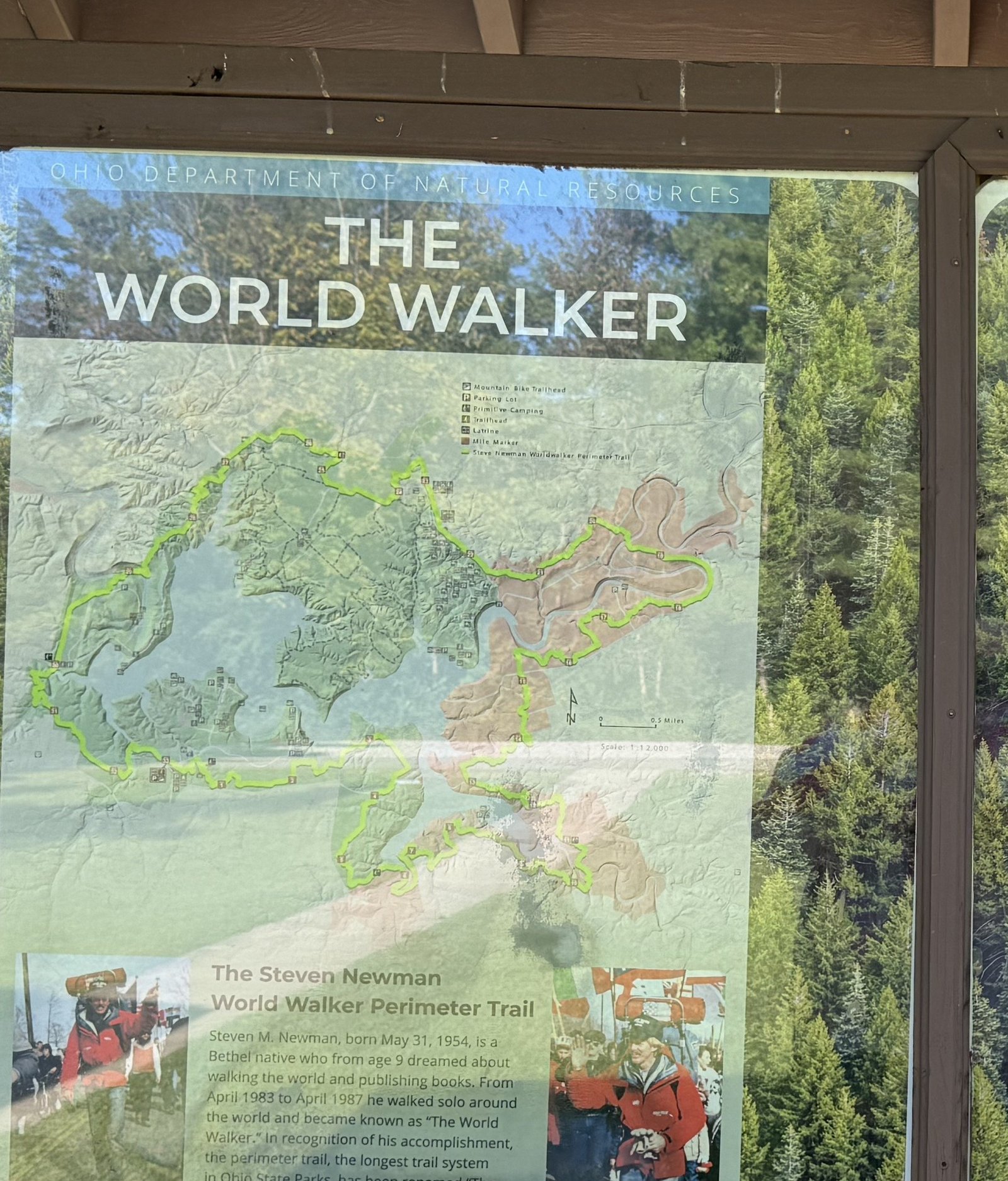
I did not walk it. It was climbing into the mid-nineties and this was reconnaissance, and thirty-three miles in that weather is a different trip with different planning. What I brought home instead was knowing it exists, knowing where the name came from, and having the shape of it on a map.
That is what a first visit is supposed to produce. Yellow Springs left me with a list: the preserve, the gorge, a stay at John Bryan, the fair I missed by a day, and a strawberry milkshake at Young’s. East Fork has done the same. You cannot plan a return to a place you have not identified. The trail goes on the list, in better weather.
Newman also rearranges the neighborhood a little. Bethel is somewhere you drive through on an errand. A man walked out of it on foot and kept going for four years.
Then he came home. I have no idea whether anyone intended the symmetry, but the trail named for him is a loop, and walking the whole thing puts you back exactly where you started.
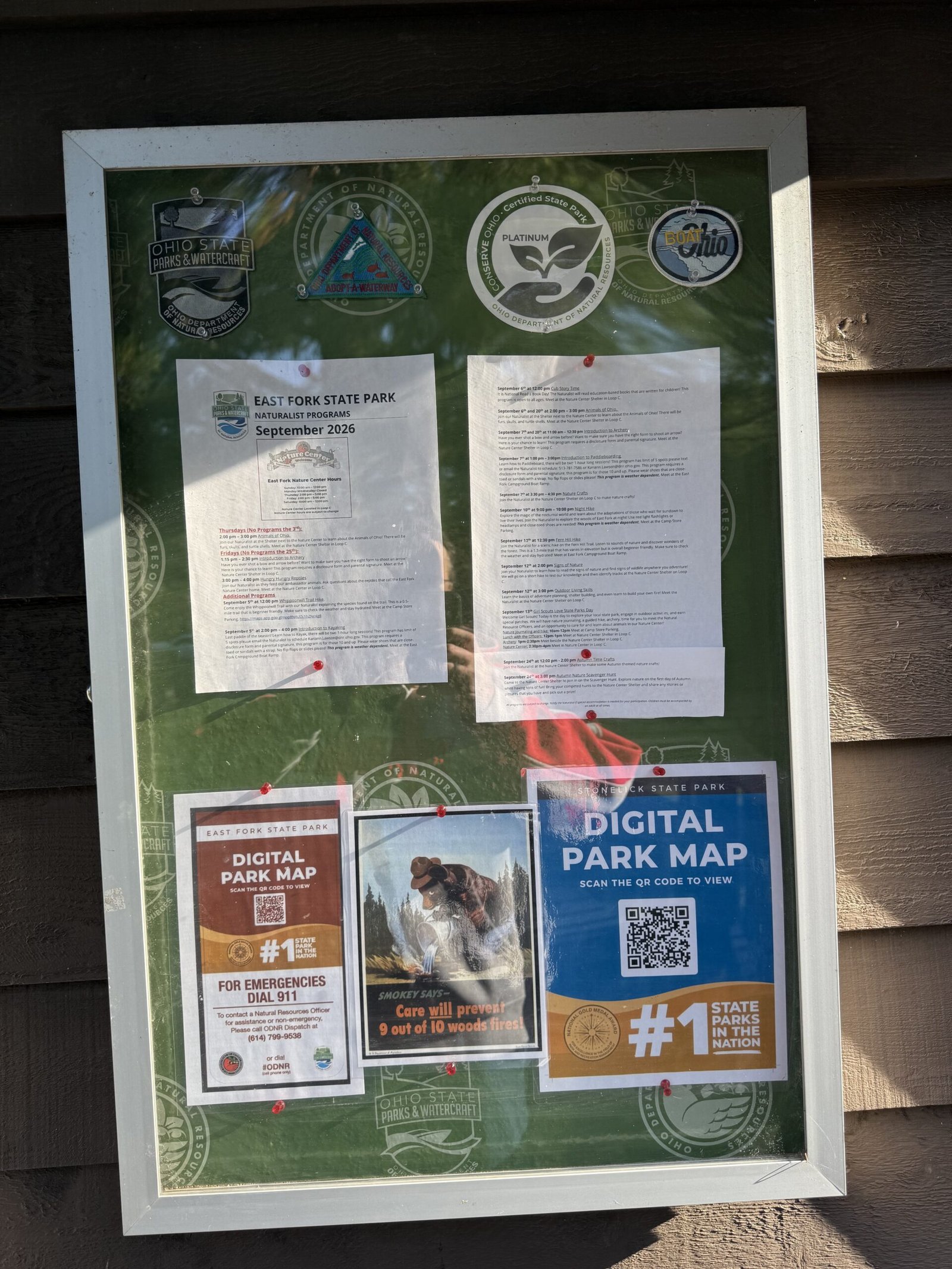
The kiosk stands outside the nature center, which runs naturalist programs on a schedule posted by the door. Nature journaling, archery, an autumn scavenger hunt. On a scouting trip that board is worth reading; it tells you what a return could be built around, and it is the kind of thing I would have walked straight past twenty years ago.
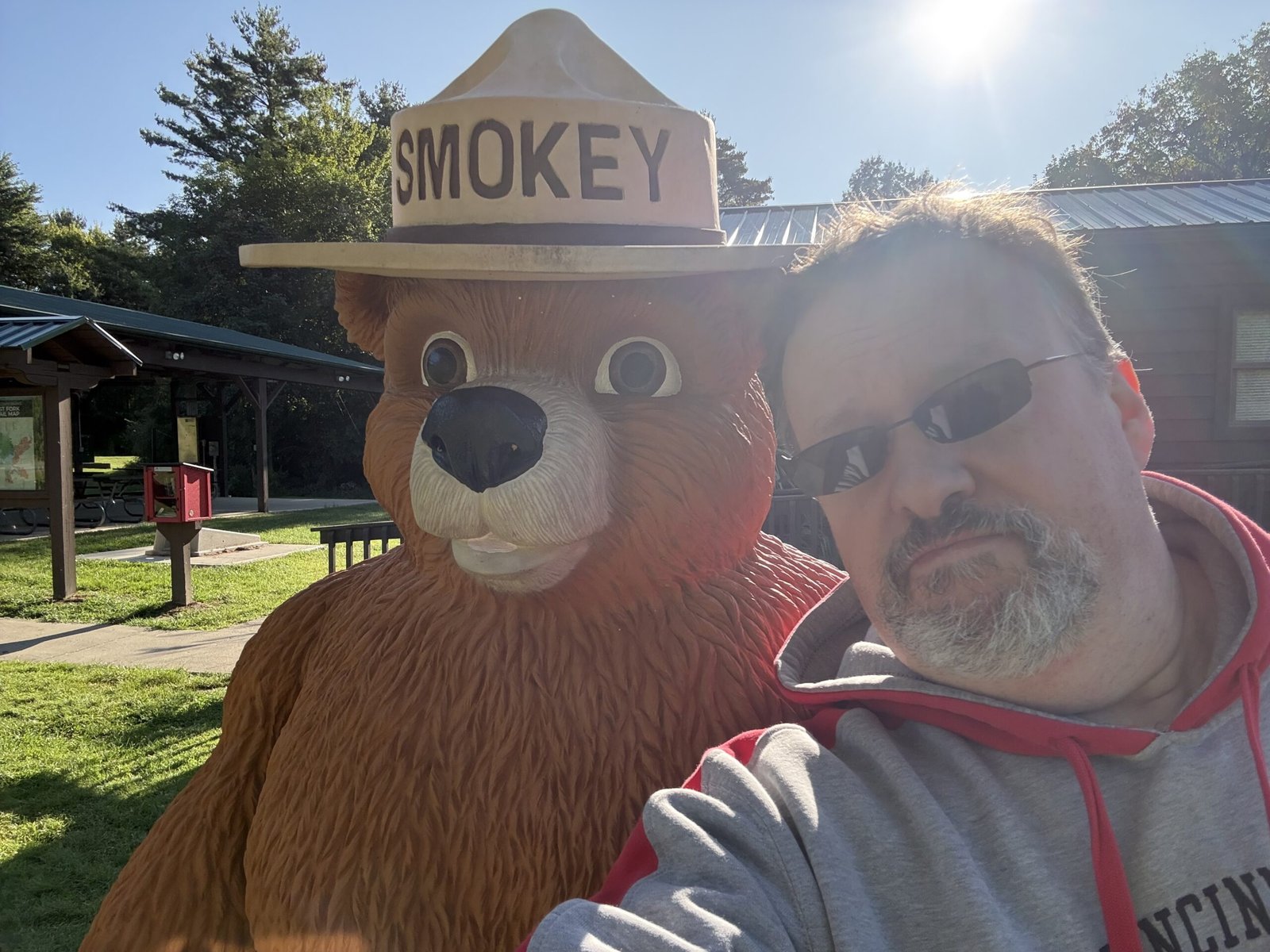
Smokey Bear stands out front on a concrete pad, hat squared, shovel in hand, roughly my height and considerably better posed. I am old enough to know better. I took the picture anyway.
What the Posts Were For
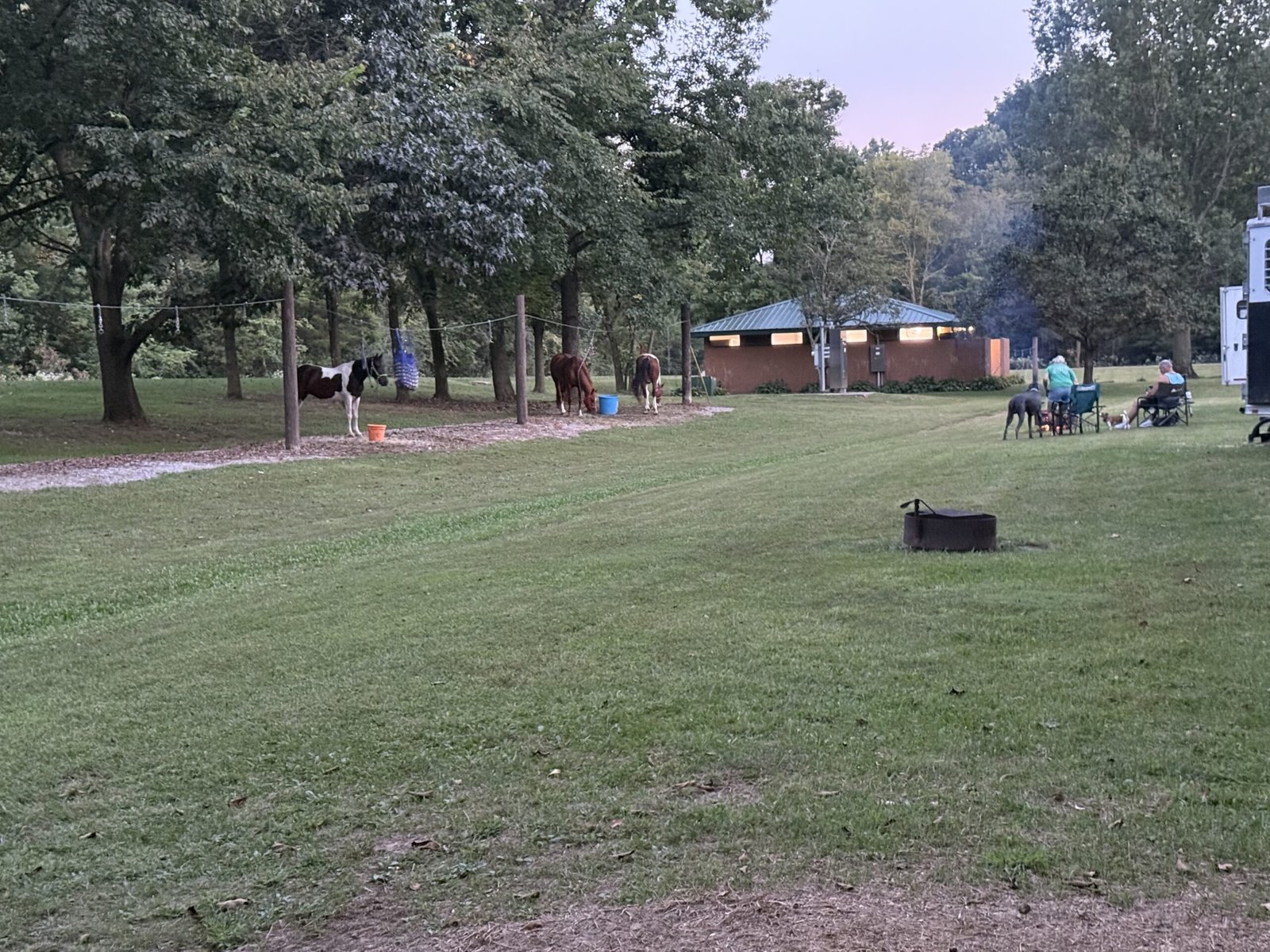
Wednesday evening there were horses on the line.
Three of them, hay nets hung from the wire, buckets on the ground, a trailer parked alongside, a fire going and people in chairs and a couple of dogs working the area for opportunities. The empty grass from my first morning had a function, and the function had been obvious the entire time.
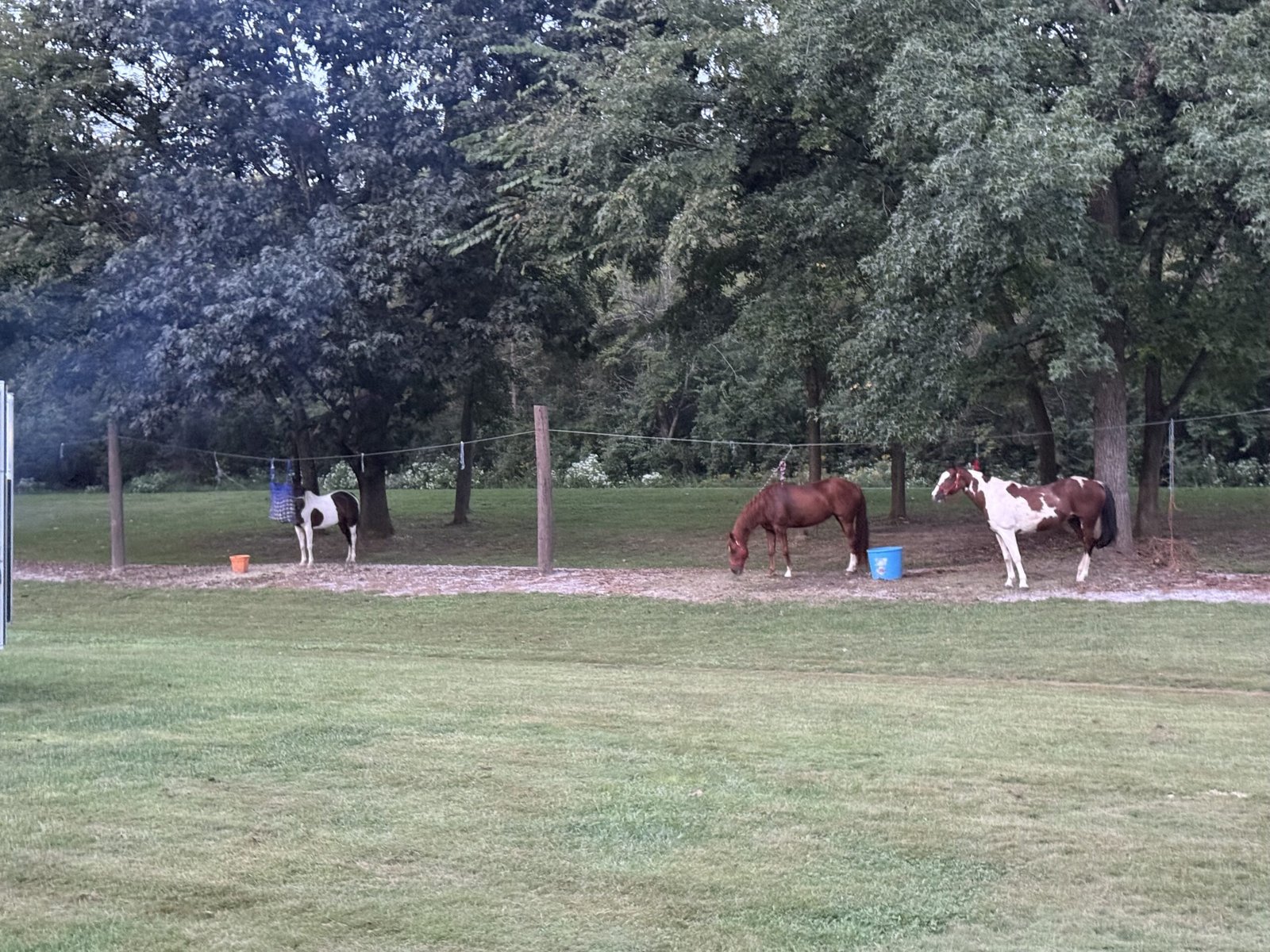
It is a horse loop, Loop A, inside the campground rather than off somewhere by itself, with its own signed bridle trailhead leading off the field. The picket line is strung through a treed run so the animals stand in shade.
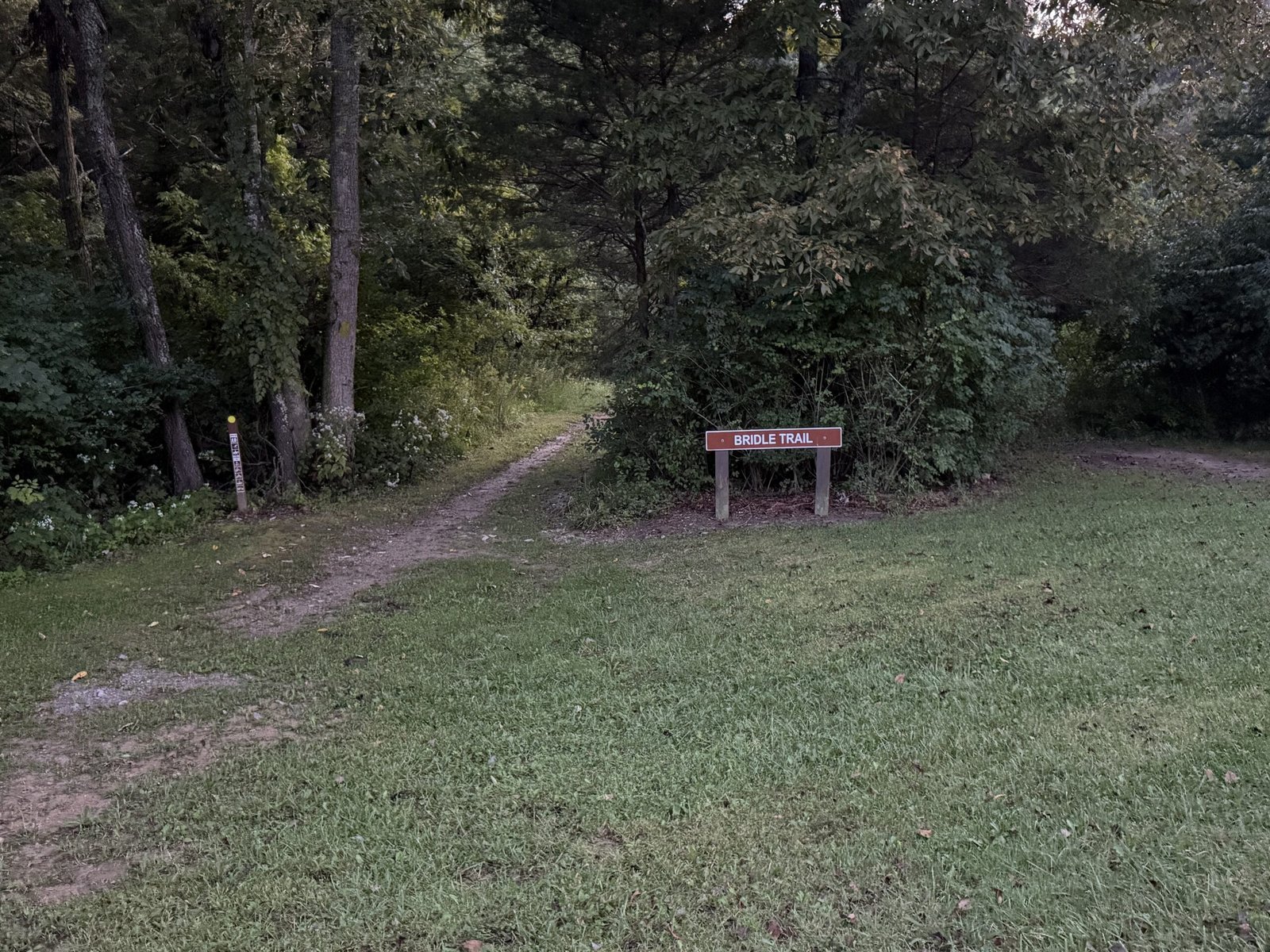
The park goes further than tolerating somebody’s trailer. There is a board at the trailhead that makes a daily call on whether the trails are open, and asks riders to honor a closure when the ground is wet enough for hooves to tear it up. Anyone can build a trail and put it on a map; keeping it usable means being willing to tell paying visitors no.
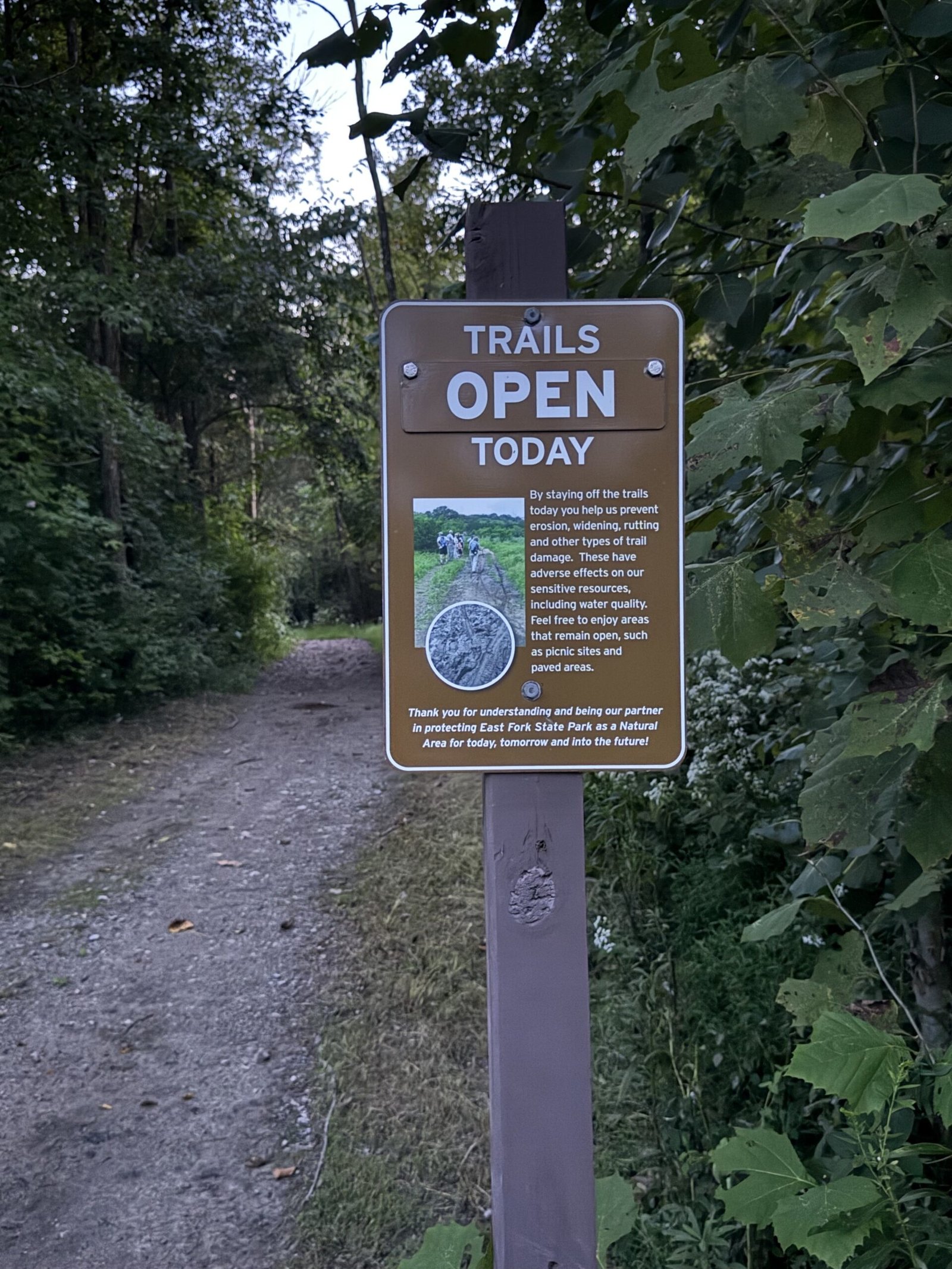
And there was a pile steaming at the trail crossing on the main road, which retired any remaining question about whether the signage was decorative. The road is shared. Watch where you step.
Two Plants on One Roadside
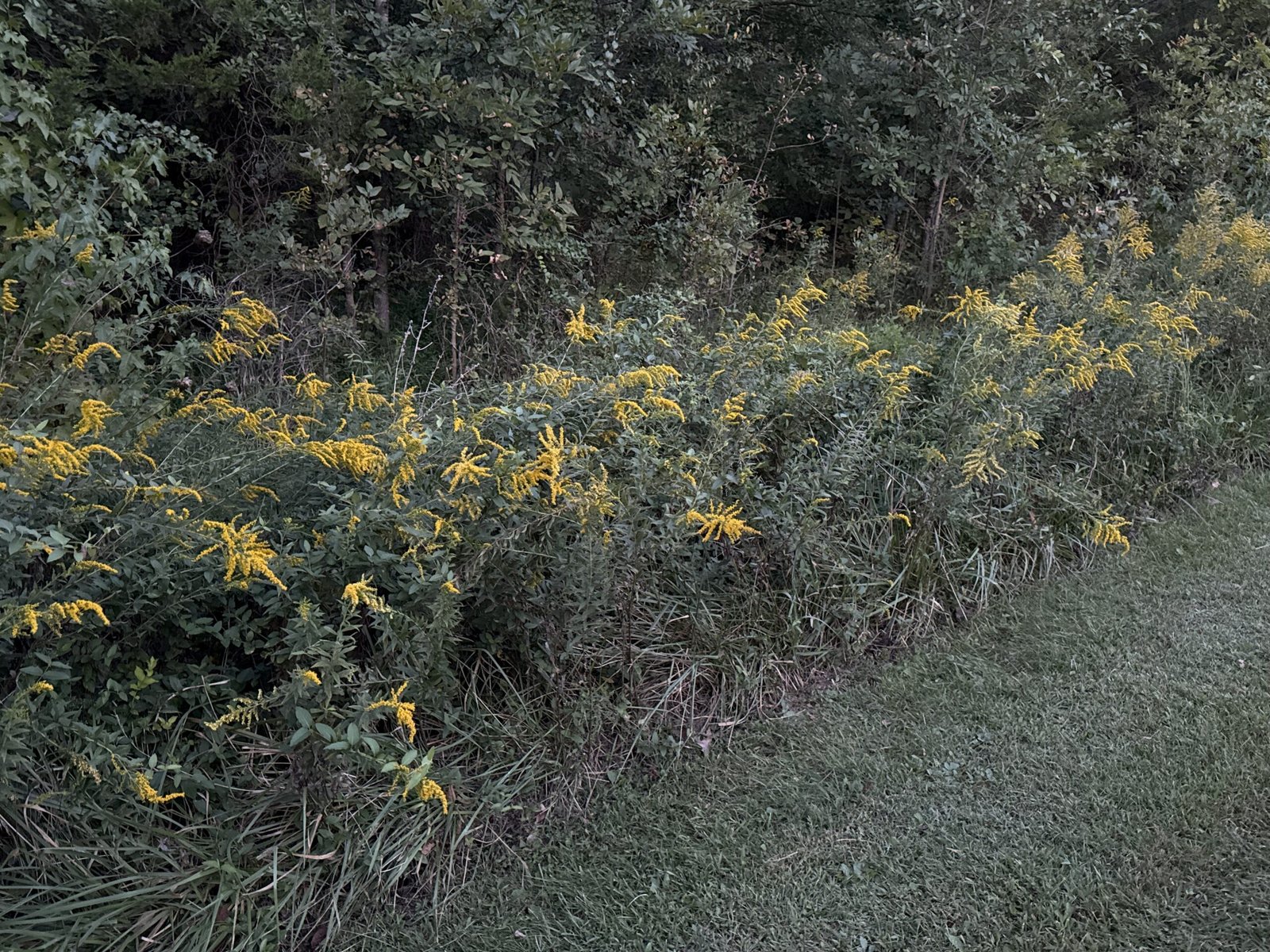
For three days, two flowers were constant along every road in the park. Yellow plumes arching along the tree lines, and lower down at the mown edges and up the banks, clusters of small white ones.
The yellow is goldenrod, and goldenrod spends every September taking the blame for other plants’ work. It is tall, bright, and flowering where people can see it, which is apparently enough. Its pollen is heavy and sticky and gets moved around by insects; very little of it is going anywhere near your face on its own. Ragweed flowers at the same time, is easy to overlook, and puts enormous quantities of light pollen into the air. The conspicuous one gets the reputation.
The white flowers beside it have a worse history than goldenrod was ever accused of.
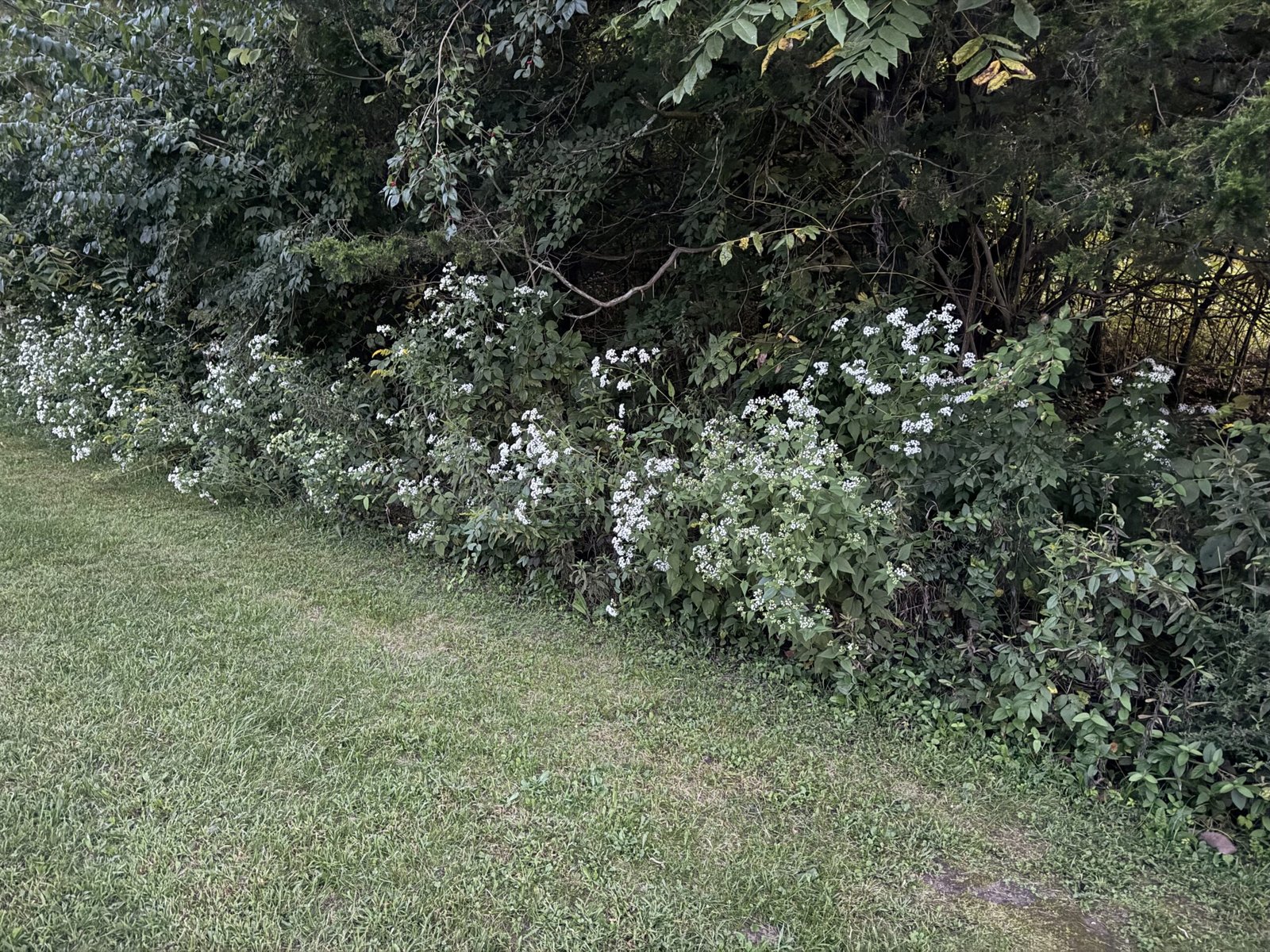
White snakeroot, Ageratina altissima, carries a toxin generally called tremetol. Cattle eat the plant, the toxin passes into their milk, and people who drank that milk got what the nineteenth century called milk sickness. It killed a great many people through the Ohio Valley and the Midwest in an era when cattle foraged in the woods and nobody could account for what was happening. Nancy Hanks Lincoln is generally said to have died of it in 1818, when Abraham was nine. That attribution is historical rather than diagnostic, but it is how most people meet the disease.
Then it comes back around to this campground, because white snakeroot is toxic to horses, and horses are believed to be more susceptible to it than cattle are. It remains poisonous when dried, which means it remains poisonous in hay.
A horse park with snakeroot along its roads sounds worse than it is, and the difference is in where the horses actually were. The picket run is shaded, grassed, and clear of the stuff. Flowers growing along a road are not evidence that anything ate them. The exposure is out on the trails and along the wooded edges, and in whatever a horse is given to eat. Keeping an animal off unidentified forage, standing or baled, is part of what you take on when you bring one into this country.
Which leaves the two plants doing opposite work in the same ditch. The conspicuous one is blamed all autumn for something it did not do. The plain one nobody looks at twice is why a rider here has a present-tense reason to know a flower by name, and why the rest of us can file the whole business under history.
The Man Who Came Over
I was photographing the horses at dusk when a man walked over and asked what I was doing.
He did not want a conversation. He wanted to know why a stranger was standing at the edge of the field taking pictures, and once that was settled he went back to his fire.
That was the whole encounter, and I thought better of the place for it. In a field holding livestock, trailers, and people who had just finished setting up, somebody noticed a man paying close attention to all of it and walked over to find out why. No accusation in it and no performance. Just the small amount of trouble that looking out for a place actually takes.
Within Reach
The nights were what I had come to find out about.
I wrote about the crickets at East Fork in No Inventory, when they arrived as part of a larger surprise. By the end of the week they had stopped being a surprise and turned into something I was listening for on purpose. That is a real change. Quiet used to be something I noticed afterward and mentioned in passing. Now it is one of the reasons I pick a place.
Crickets are not quiet, of course, and neither is wind working through a canopy. But neither one asks anything of me, and that turns out to be the distinction that matters.
Twenty-five miles from my own front door. Half an hour. I could have driven home for something I forgot and been back before it counted as an outing, and the distance still did what I needed distance to do, which ought to be absurd and somehow is not.
It gets more absurd when you admit the phone worked fine. So did the internet. I had a connection all week without a single interruption, and I was glad of it, because a working connection is what makes a longer stay possible at all. Nothing out there was going to make the evening’s decision on my behalf.
Another Gethsemani
That is the comparison running underneath all of these trips. I am looking for another Gethsemani.
The abbey gives withdrawal a structure. Vigils is at 3:15 whether or not I get up for it; meals happen when they happen; most of the building is kept silent; the phone barely worked. Nobody made me attend anything. But the shape of the day had already been decided by somebody else and was being held in place by several dozen men who have been at it a very long time, and for a few days I could simply live inside it.
East Fork holds up its end differently: a canopy, room between the sites, somebody who mows and repairs and pays attention, a lake doing its job down the hill, and neighbors who keep their evening to themselves. An ordinary thing, assembled well, and for most of a week it produced something worth driving out for.
What it does not do is decide anything on my behalf. The abbey will be keeping its hours in February, in the rain, with nobody watching. Here the phone works and the signal is good, and every night I had to put the thing down myself.
I left on Friday with the loops filling in behind me, so I still do not know what this place sounds like on a Saturday. I know what it sounded like on Tuesday.
Practical Notes
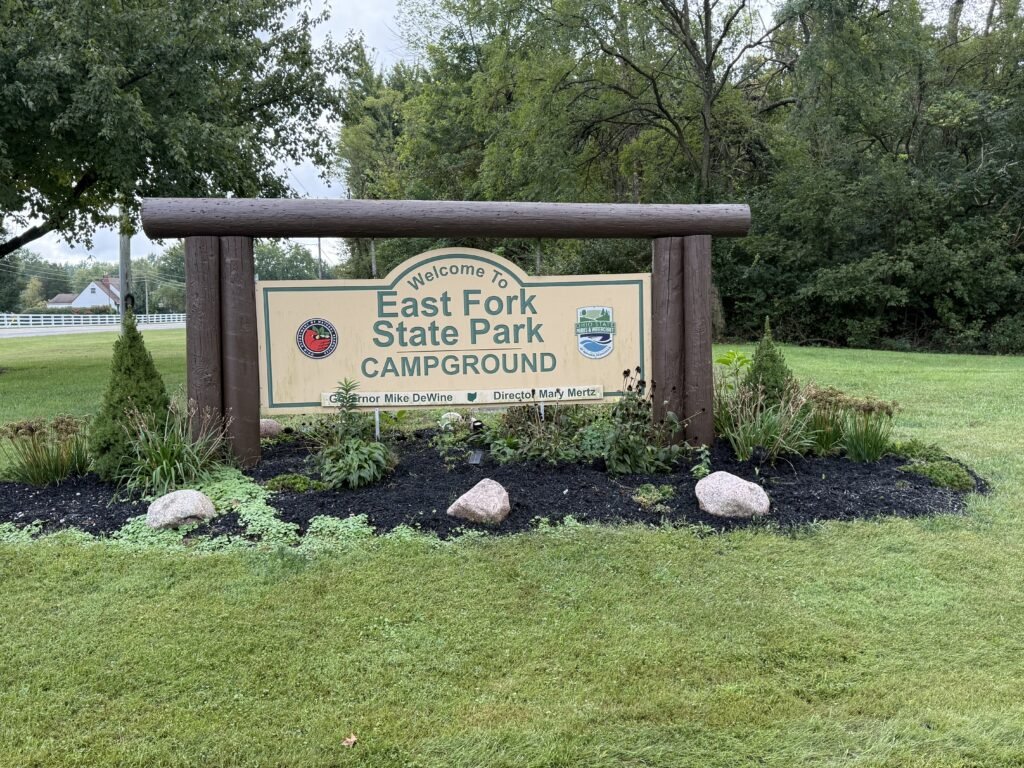
Getting there. The campground is off Old State Route 32 near Batavia. Navigate to the campground rather than the park; there is a great deal of lake here and several ways to end up on the wrong side of it.
Rates and the Golden Buckeye card. As of September 2026, an electric site, which suits a tent or a rig equally well, runs $39 a night; full hookups, adding water and sewer, run $52. Potable water is available at the dump station for sites that do not have it. Rates vary by park, season and site type, so confirm the figure for your own dates. The card is the part worth knowing: Golden Buckeye holders get fifty percent off weekday camping, and Friday and Saturday nights are excluded. A Sunday-through-Thursday stay comes in at half price whatever tier you booked. Plan a weekend and you will be looking at a different number.
Sites and hookups. Full hookups, sewer included, are limited to specific sites rather than whole loops: C Loop 43, 45, 47, 49 and 51 through 63, and G Loop 219, 221, 242, 244, 246 and 248. Everything else is electric or primitive. Check the individual site rather than the loop.
Water. It reeks of sulphur. That was the one real negative of the week, and it is a comment on the smell rather than a water quality finding. Bring drinking water.
Connectivity. TravlFi held all week without a hiccup. I carry Mint Mobile, which rides on T-Mobile, and Verizon. Across the parks I have been visiting, T-Mobile has been the better data connection and Verizon has been fine for calls; East Fork was no exception.
Horses. Loop A is the equestrian loop, with picket lines strung in a shaded run and a signed bridle trailhead off the field. Read the conditions board before you ride and honor a closure when you get one.
Nature center. Naturalist programs run out of the nature center and the camp store parking area on a monthly schedule posted at the board.
When to go. Midweek, if you have the choice. Wednesday through Thursday morning was the best of it by a distance.

Discover more from Rogue Wayfarer
Subscribe to get the latest posts sent to your email.